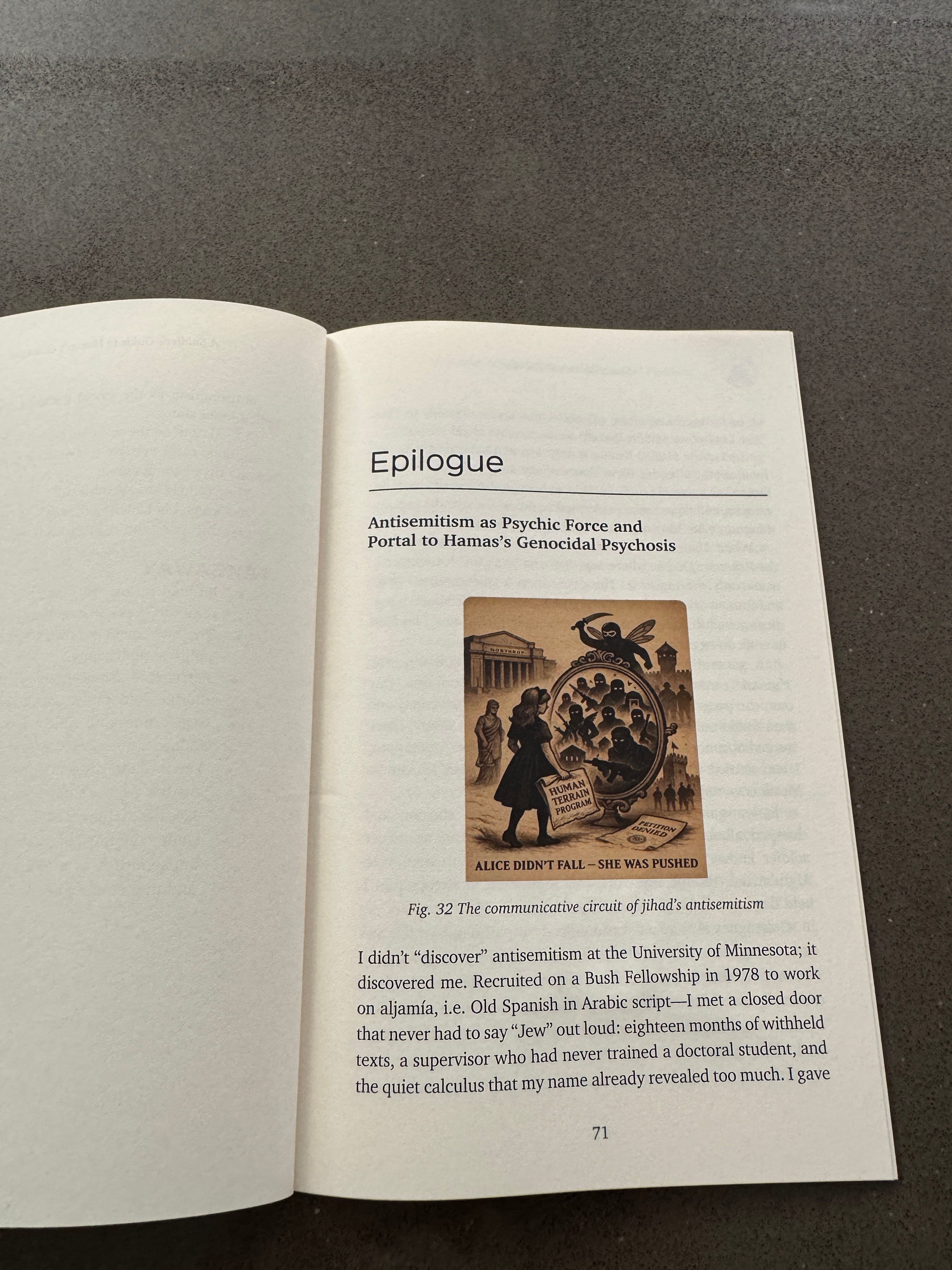
Fig. 32 The communicative circuit of jihad’s antisemitism
I didn’t “discover” antisemitism at the University of Minnesota; it discovered me. Recruited on a Bush Fellowship in 1978 to work on aljamía, i.e. Old Spanish in Arabic script—I met a closed door that never had to say “Jew” out loud: eighteen months of withheld texts, a supervisor who had never trained a doctoral student, and the quiet calculus that my name already revealed too much. I gave blood for his transfusions, eulogized him, and was briefly treated “like family”—a Middle Eastern lesson in what blood means.
In Tunisia (1983) I was the only Jew at a Saudi-funded conference placed under surveillance as my assigned female roommate was a member of the PLO unbeknownst to me; back on campus, colleagues who performed “cultural theory” skipped my daughter’s Bat Mitzvah while denouncing Israel as colonial.
When I sued the university for sex discrimination under the Rajender Decree, there was “no smoking gun” for antisemitism—only the fog of it. The department’s star imported texts and frameworks that became the seedbed of today’s identity-politics antisemitism, long before anyone called it “woke.” I learned to walk on eggshells, to read subtext, to survive.
A generation later at Fort Leavenworth (2008–09), the Human Terrain Program repeated the pattern in uniform. Day one, the program head recited every religion represented and then—after a theatrical pause—“and we even have Jews.” There were almost none. When I requested a weekend for Yom Kippur, I was denied (“then we’d have to allow Ramadan”), even as Muslims were granted observance.
In war-games at Fort Irwin I was grabbed, shaken, and dumped alone in a deserted warehouse zone—an act every soldier knows is a betrayal. I wasn’t permitted to deploy to Afghanistan, though my work was later used in psyops and I held dog tags and a JPAS security clearance.
Colleagues minimized, rationalized, or pathologized the antisemitism; some insisted I must have done “something wrong.” I recognized the mechanism from Minnesota: scapegoat the Jew, especially the woman analyst, then claim there was no intent. Those two tracks—campus and cantonment—forced me through the looking glass.
Antisemitism taught me to map the unconscious terrain beneath—
Stay tuned for The Epilogue Part II tomorrow.
As a PTSD expert focusing not only on the patients but as significantly on the mind of the predator, I estimate that this information will help 5-10% of those who have a need to understand the terror in detail. In turn this knowledge will have a ripple effect.
Nancy Hartevelt Kobrin, PhD
nancykobrin.org
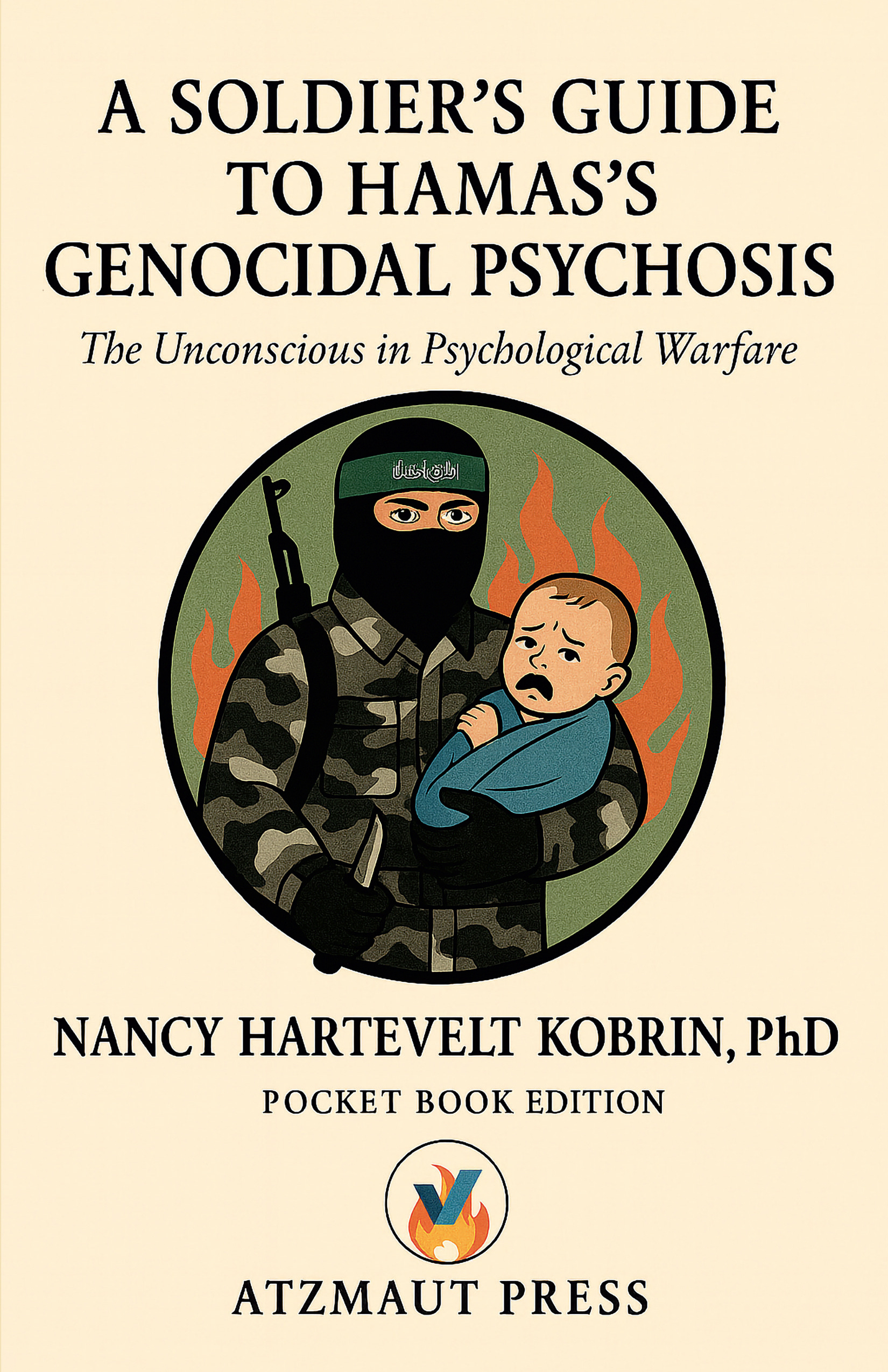
A Soldier’s Guide to Hamas’s Genocidal Psychosis (Atzmaut Press, Tel Aviv, 2025)