

On Meet the Press this past Sunday, Kristen Welker asked Abdul El-Sayed, the Democratic Senate candidate in Michigan, whether he or his family had ties to the Muslim Brotherhood. He answered “No,” twice.
Within a day, the Washington Free Beacon published what his half-sister had written years earlier. Eman Abdelhadi, today a sociologist at the University of Chicago, shares a mother with El-Sayed: Fatten Elkomy, who emigrated from Egypt in the late 1970s, married El-Sayed’s father and, after their divorce, married Abdelhadi’s Palestinian father. On June 24, 2012, days after Mohamed Morsi of the Muslim Brotherhood was elected president of Egypt, Abdelhadi wrote: “My family has long been MB.” On July 3, 2013, the day the Egyptian army removed Morsi, she wrote that she had “had family jailed for being a part of it,” and prayed for relatives in Egypt who support the Brotherhood, urging them to “lie low, stay safe.”
The memory goes back further still. In another post from June 2012, Abdelhadi wrote that she “had an amazing talk with my mom about her activism in the Muslim Brotherhood during the early 70s while she was in college.” The Brotherhood was not only an uncle in a jail cell. It was the mother’s own youth. And the mother herself is missing from El-Sayed’s campaign story, which speaks of his father and his stepmother. The son has written his mother out. The daughter keeps her in.
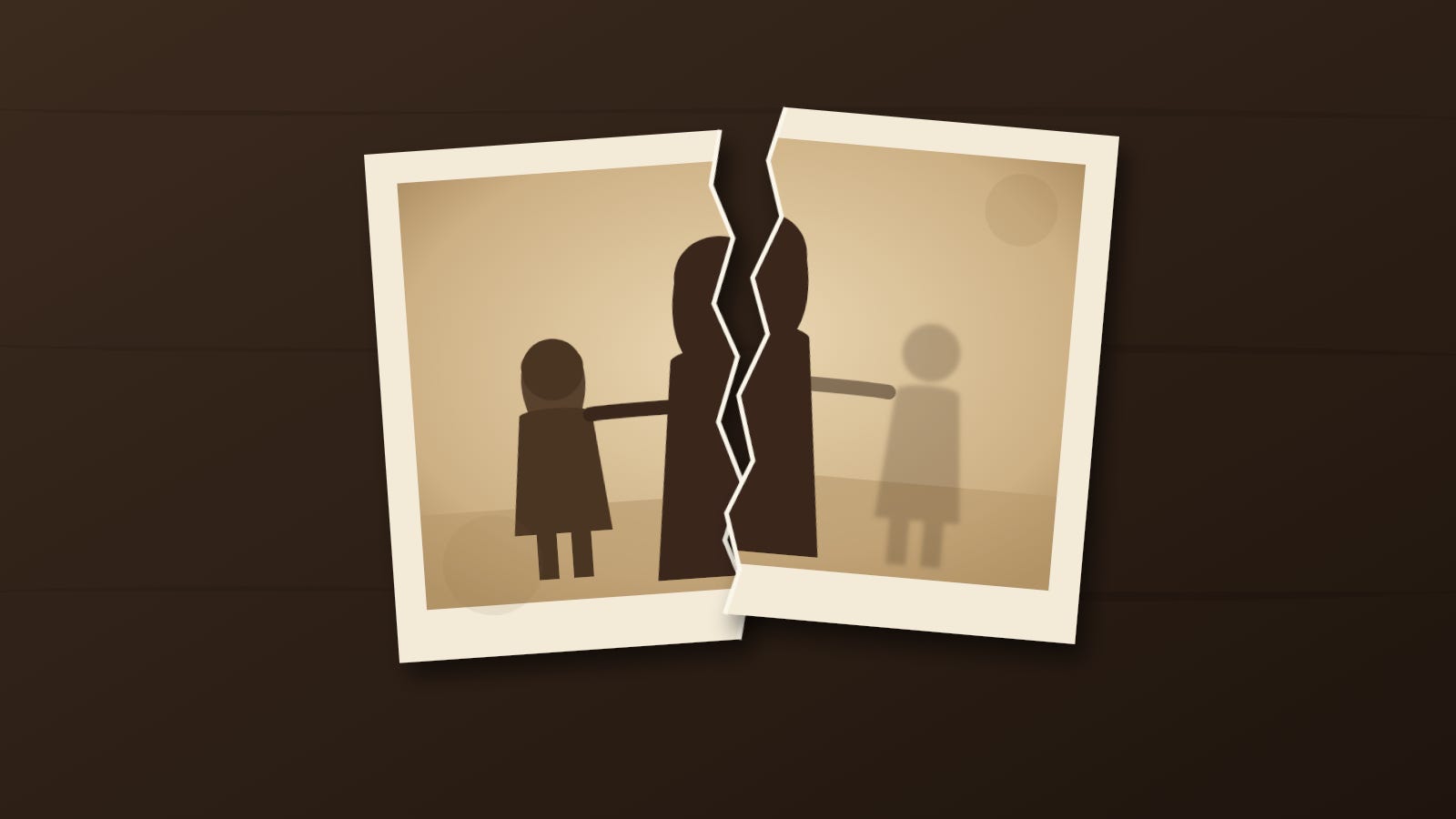
One mother. Two children. Two answers. The daughter remembers out loud. The son denies on national television.
Even the mother’s name speaks. Fatten, more often spelled Faten, means enchanting, captivating, alluring. It comes from the Arabic root f-t-n, the same root as fitna: temptation, trial, and the civil strife that splits the community of believers. In a well-known hadith in Sahih al-Bukhari, the Prophet says he has left behind no fitna more harmful to men than women. In that tradition the woman is herself fitna, the source of seduction and division. And here, around this mother, the family divides: one child speaking, one denying.
I wrote earlier about the unseen years of Fatten Elkomy and her infant son, the years from zero to three when a child’s first world is the mother and whatever she carries with her: her family, her country, her loyalties and her fears. The question I raised then was what came with her from Egypt. Her daughter has now answered part of it. The family’s attachment to the Brotherhood was not a rumor invented by political opponents. It was something a daughter knew well enough to announce with pride in 2012 and to fear for in 2013.
Psychoanalytically, what interests me is not the politics but the split. Two children raised by the same mother hold opposite versions of the same family. One keeps the memory. The other erases it. This is splitting, the most primitive defense of the mind, played out not inside one person but across a family. The memory does not disappear. It is deposited in the sibling who can bear to hold it, while the other presents a clean surface to the world. Families do this all the time. What makes this case different is that the clean surface is running for the United States Senate.
Notice, too, the phrase “lie low, stay safe.” It is the voice of a family that has learned concealment as a means of survival. In Egypt after 2013, that instinct was understandable; Brotherhood members were jailed and worse. But a habit learned in fear does not stay in one country. It travels with the family, and it shapes how its children answer questions in public. Concealment becomes a reflex long before it becomes a strategy.
There is an irony here that should not be missed. Abdelhadi’s own research at Chicago concerns how attachment to Muslim communities is passed down and gendered across generations. She studies exactly what her family illustrates: the daughter who stays attached and speaks, the son who detaches in public and goes silent. The maternal line is where the memory survives.
On October 24th, Barack Obama is scheduled to campaign with El-Sayed in Detroit. The pairing is more fitting than either man may realize. Obama’s mother, Ann Dunham, also married twice and had a child with each husband: Barack with his Kenyan father, his half-sister Maya with his Indonesian stepfather. Obama, too, grew up across two worlds, and he, too, offered the public a shaped version of his childhood. In the introduction to Dreams from My Father, he acknowledged that some characters are composites and that he compressed events. David Garrow’s biography, Rising Star, later showed how much had been reshaped.
What Obama’s memoir minimized was the mother. The book is a meditation on the absent father, a man he barely knew, turned into a myth. The mother who raised him stays in the background. After her death, Obama himself wrote that had he known she would not survive her illness, he might have written a different book, less about the absent parent and more about the one who was the constant in his life. It is a rare and honest admission of what the public story leaves out.
El-Sayed’s story leaves out the mother’s side too. Asked about her family’s ties to the Muslim Brotherhood, he said no. It took his sister’s words to bring that world back into view. Two sons of twice-married mothers, two candidates, two curated childhoods. In both, what is minimized is what matters most: the mother, and everything that came with her. The unseen years do not stay unseen. Sooner or later, someone in the family remembers.
I am not suggesting that a man is responsible for his relatives’ politics, or that every child of a Brotherhood family shares its views. I am saying that when a candidate is asked a direct question about his family and answers “No,” and his own sister’s words say otherwise, the public is entitled to ask which answer is true. I am entitled to ask what it costs a son to deny his mother’s world, and what that denial is protecting.
El-Sayed has built his campaign on authenticity. He should start by being authentic about his own family. His sister already has.
Sources
Washington Free Beacon, “Abdul El-Sayed’s Family Has ‘Long Been’ in Egyptian Muslim Brotherhood, Senate Candidate’s Sister Said,” October 2026. https://freebeacon.substack.com/p/abdul-el-sayeds-family-has-long-been
Washington Free Beacon, “Abdul El-Sayed’s Mother Was Active in Muslim Brotherhood in College, Sister Said,” October 12, 2026. https://freebeacon.com/democrats/abdul-el-sayeds-mother-was-active-in-muslim-brotherhood-in-college-sister-said/
Israel Hayom, “Abdul El-Sayed’s mother worked for terror-designated IARA,” August 20, 2026. https://www.israelhayom.com/2026/08/20/abdul-el-sayed-mother-iara-terror-michigan-senate/
Townhall, “Abdul El-Sayed Denied Having Family Ties to the Muslim Brotherhood, but His Sister Proved He’s Lying,” October 12, 2026. https://townhall.com/news/amy-curtis/2026/10/12/el-sayed-meet-the-press-muslim-brotherhood-n2684511
Abe Greenwald, “El-Sayed in the Harsh Light,” Commentary, October 12, 2026.
Barack Obama, Dreams from My Father (1995; preface to the 2004 edition).
David J. Garrow, Rising Star: The Making of Barack Obama (William Morrow, 2017).
Associated Press, “Obama is to appear with El-Sayed in Detroit as the ex-president gets more involved in the midterms,” October 2026. https://www.ajc.com/news/2026/10/obama-is-to-appear-with-el-sayed-in-detroit-as-the-ex-president-gets-more-involved-in-the-midterms/
Sahih al-Bukhari, Book of Marriage (Kitab al-Nikah), hadith 5096.
University of Chicago, Department of Comparative Human Development, faculty page of Eman Abdelhadi. https://humdev.uchicago.edu/node/23563
Nancy Hartevelt Kobrin, PhD, is a Tel Aviv–based psychoanalyst and counterterrorism scholar. https://www.amazon.com/Nancy-Kobrin/e/B002RF9D5Y