In Wednesday’s final Michigan debate, Abdul El-Sayed waved away questions about his family’s ties to the Muslim Brotherhood with one sentence. Why, he asked, does Mike Rogers keep raising this “because of my mom who’s a nurse in Missouri?”
A nurse in Missouri. Six words to make a mother small.
The Mother Made Small
I have written before that Fatten Elkomy is not a “birth mother,” as if her son had been given up for adoption. She was his mother in the unseen years, from birth to age three, when the deepest bonds are laid down. Reducing her now to a job title does to her in public what the family story has done all along: it keeps her at a distance, harmless and out of view.
The record is not small. From 1999 until at least 2004, Elkomy worked for the Islamic American Relief Agency in Columbia, Missouri. In 2004 the U.S. Treasury designated IARA’s worldwide network for financing terror, including bin Laden’s precursor network, the Taliban and Hamas. The FBI raided the Columbia office in October 2004, and agents interviewed Elkomy for about three hours. In the later federal case, court exhibits named her 14 times and documented her part in eight wire transfers, including one of $24,607.34 to IARA’s office in Iraq. She was never charged. IARA and two of its board members pleaded guilty.
His half-sister, Eman Abdelhadi, a University of Chicago professor, has also written that their mother was active in the Muslim Brotherhood as a college student in Egypt in the early 1970s.
The House That Whispered
In 2016, writing about a vigil after the Pulse nightclub shooting, Eman recalled “the FBI raiding mosques, homes—including my own—and Muslim charity organizations.” The raid did not stop at the office door. It reached the family home.
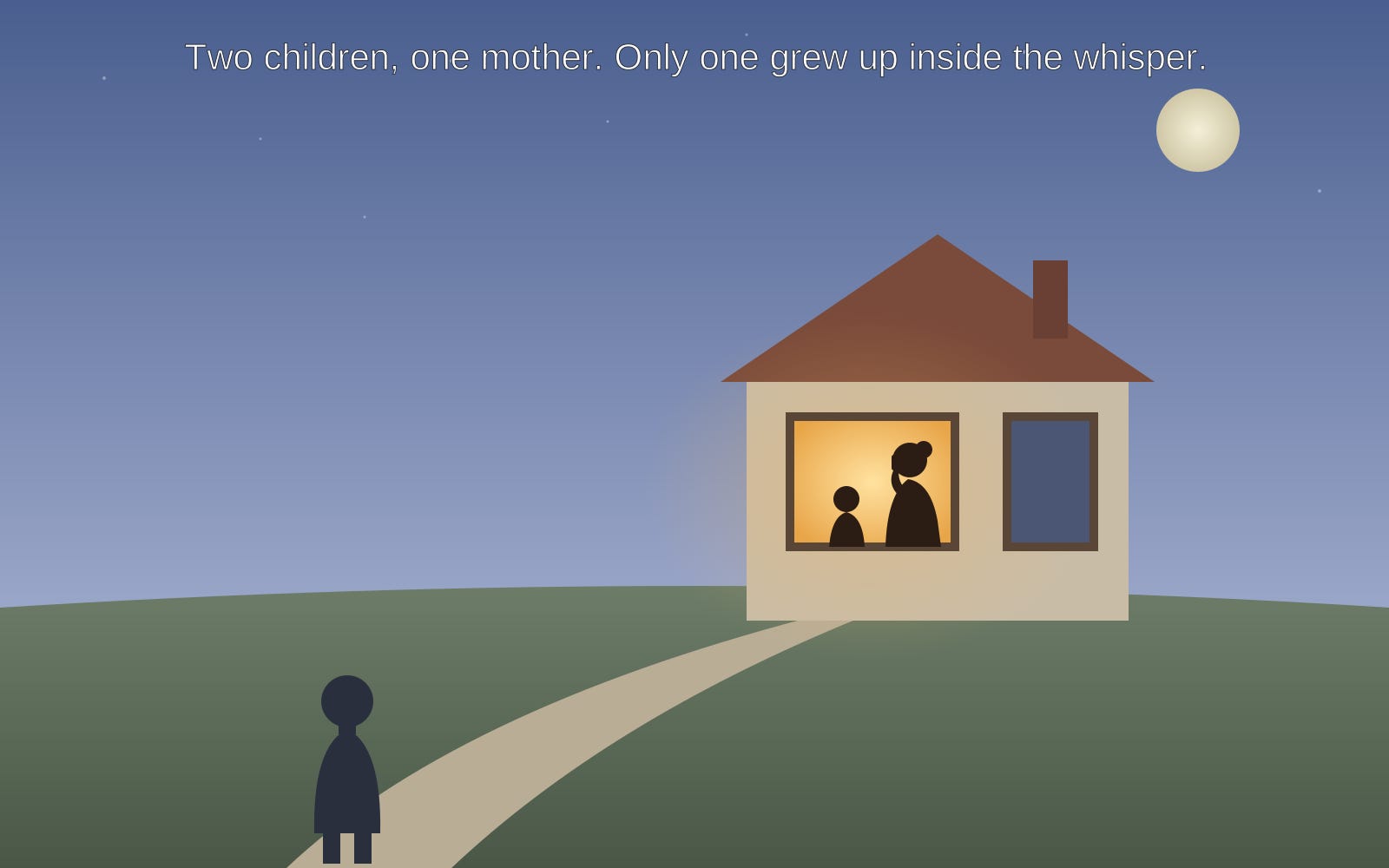
Eman grew up in her mother’s house, and she has described it. “Between work, school, and mothering was the FBI,” she wrote in 2024. She remembers her mother combing “through our house, our books, our CDs, our cassette tapes for anything that might be misinterpreted if our house got raided.” After the FBI’s calls, she could picture her mother’s face, “terrified but defiant.” And then the line that stays: “We learned to whisper even in our homes.”
A house where children learn to whisper is a house organized around what must not be seen. That is the setting in which shame does its work. Nothing is spoken; everything is hidden; the danger is always outside, coming to the door.
Two Children, One Mother
Abdul did not grow up in that house. His parents divorced in Missouri when he was about three, and he was raised on his father’s side. Eman, born to Elkomy’s second marriage, grew up inside the whisper. Abdul grew up outside it.
So when he told NBC’s Tom Llamas, “I have never had these conversations with my mother,” he may be telling the literal truth. But it is not an answer. It is a description of a loss. A son separated from his mother at the end of the unseen years, who as a grown man running for the Senate says he never asked her about the most consequential years of her working life, is telling us where the silence lives.
He is not estranged from the family. He served as Eman’s guardian at her 2016 wedding. He sent her money for their mother’s birthday gift. The family is close enough for gifts and ceremonies. It is the questions that are kept away.
Hearsay
El-Sayed dismissed his sister’s posts as “hearsay evidence from a tweet. This is not serious.” Notice the reversal again. A sister’s firsthand account of her own childhood becomes gossip. In his fairy tale about Israel, the bad friend talks behind the children’s backs. In his own family, the children learned to whisper behind closed doors, and the one who speaks openly about it is the one he calls unreliable.
I am not diagnosing Abdul El-Sayed, and I am not charging his mother with anything the record does not show. I am describing a type within Woke 2.0, and what this candidate says and refuses to ask.
What Michigan Is Owed
No one is responsible for his mother’s choices. But a man who wants to sit in the United States Senate is responsible for his own answers. “A nurse in Missouri” is not an answer. Neither is “I have never had these conversations.” Michigan voters are entitled to ask him to have them now, out loud, in a voice above a whisper.
Sources:
Alana Goodman, “FBI Raided Home of El-Sayed’s Mother, Senate Candidate’s Sister Wrote in Unearthed Article,” Washington Free Beacon, October 24, 2026.
Sudiksha Kochi, “El-Sayed, Rogers face off in last Michigan Senate debate: 3 takeaways,” The Hill, October 21, 2026.
Eman Abdelhadi, “I Tweeted Chicago Protesters Were ‘Ready’ for Harris. Then, I Got the Call From the FBI,” Zeteo, August 2024.
Nancy Hartevelt Kobrin, PhD, is a Tel Aviv–based psychoanalyst and counterterrorism scholar.
https://www.amazon.com/Nancy-Kobrin/e/B002RF9D5Y