

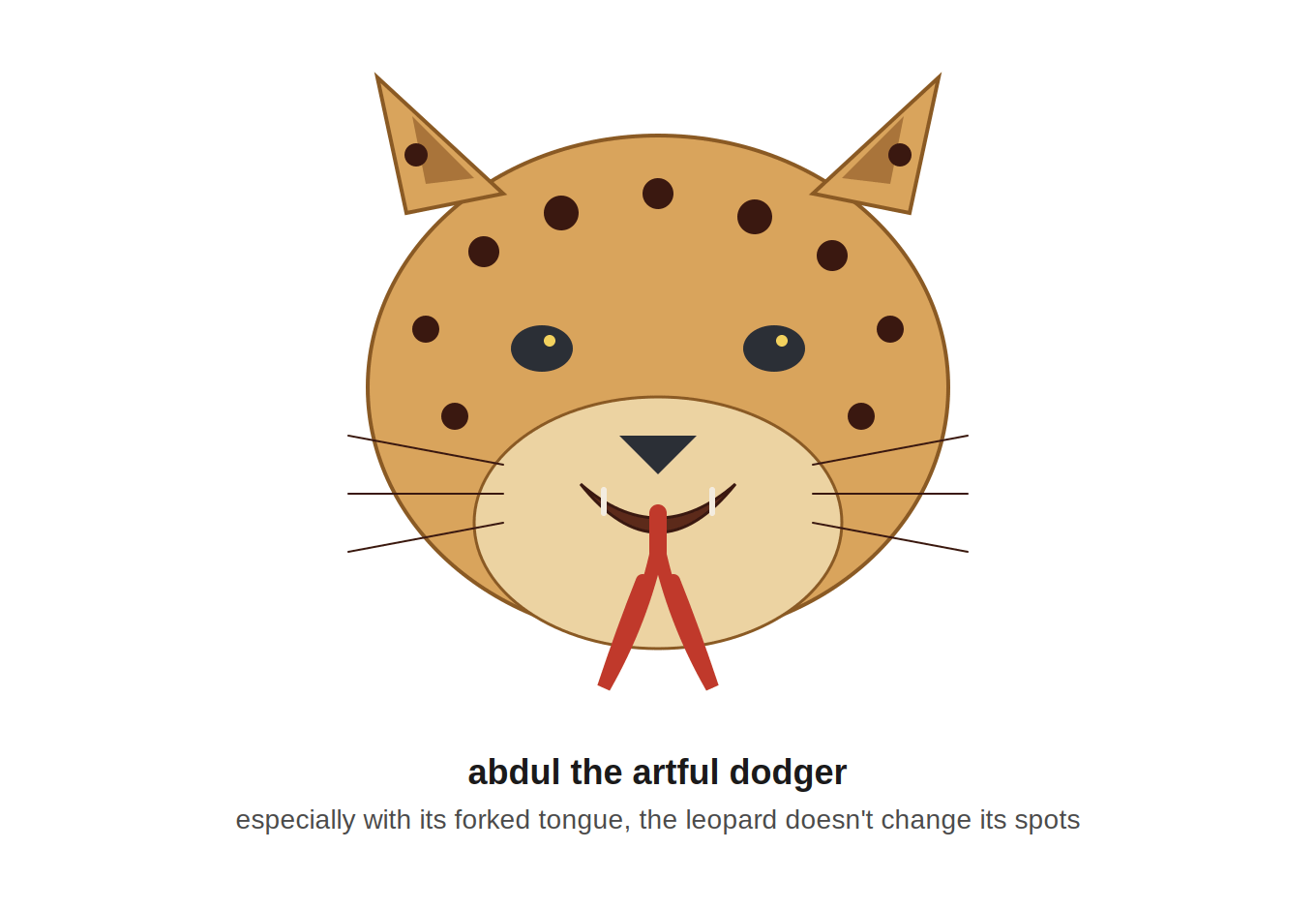
Watch how Abdul El-Sayed answers a direct question and you learn more than any donor list will tell you. Twice on Meet the Press, Kristen Welker asked him plainly whether he’d keep campaigning with Hasan Piker. Twice he answered a question nobody asked — “I’m a lot more concerned about who I’m campaigning to” — and when she pushed on Piker’s “America deserved 9/11” line, he called it “dumb,” said Piker had “disavowed” it, then pivoted to accusing her of “gotcha politics.” That’s not an answer. It’s a technique: concede a word, redirect the sentence, and dodge the actual question every time. Call him what he is — Abdul the Artful Dodger.
It is the same technique that runs through everything below — and it is worth naming before the specifics, because once you see it in one place you see it everywhere in his record.
A Decade-Old Pattern
El-Sayed’s engagement with Islamism didn’t start with this campaign. In 2011, he called American concern about the Muslim Brotherhood “orientalist,” comparable to “the synonymization of Islam and terrorism.” That’s not proof he supported the Brotherhood. It is proof he’s spent over a decade arguing that American wariness of Islamist movements is itself the problem.
Family, Funding, and the Brotherhood Question
The stakes of that argument changed in January 2026, when the U.S. designated the Egyptian and Jordanian Muslim Brotherhood branches as Specially Designated Global Terrorists. Which makes El-Sayed’s family ties harder to wave off. His father-in-law, Tayeb Jukaku, is a former CAIR Michigan president tied to ISNA — and a financial backer of El-Sayed’s political career. His campaign has taken over $115,000 from 41 donors with CAIR affiliations. CAIR itself was named an unindicted co-conspirator in the 2007 Holy Land Foundation case, never charged, and denies the charge.
None of this proves El-Sayed supports terrorism. It does mean a self-styled reformer has built a campaign on money and family ties to a network that keeps drawing federal scrutiny — including, on the day he won his primary, Senate Judiciary Committee testimony naming his family’s ISNA connections directly.
“Hurt People Hurt People”
Then there’s the tell that matters more than any donor list: how he responds when Jews are actually attacked. After a Hezbollah-influenced man attacked Temple Israel’s preschool in West Bloomfield, El-Sayed’s response was: “Hurt people hurt people.”
That line is false, and it’s worth saying plainly why. Not all hurt people hurt people. Most don’t. The ones who do are the ones who never metabolized the rage — who let it calcify into a grievance that needs a target, like the accusation that Jews are committing genocide, a term coined to name the horror of the Holocaust itself, now turned back against its own survivors’ children — instead of doing the work of dealing with it. A physician, of all people, should know the difference between a wound and a decision. Reaching for “hurt people hurt people” the moment Jewish children are the victims isn’t compassion — it’s a ready-made excuse for the attacker, dressed up as psychological insight.
His memoir is called Healing Politics. On this evidence, a more honest title would be Healing by Hurting Others — a politics that reaches for someone else’s pain to explain away his own silences.
The Gaslighting Pattern
It is the same move, over and over: 2011’s “orientalism,” Dearborn’s sensitivities over Khamenei’s death, the refusal to simply condemn an attack on a synagogue preschool. Half a truth, offered as the whole of it, every time someone asks him to just say the plain thing. That’s the pattern — not one scandal but a habit of gaslighting reframed as nuance.
Piker Is the Distraction, Not the Point
That’s why Piker is close to beside the point. You don’t need to litigate every clip of a man El-Sayed chose to campaign with, chose to keep campaigning with, and chose to defend on national television because of his “enormous audience.” The company a man keeps because it’s useful to him tells you plenty on its own. Jeremiah asked it three thousand years ago: can the leopard change its spots? El-Sayed’s spots were visible in 2011. They haven’t moved since.
The Stakes
Abdul El-Sayed is now the Democratic nominee for U.S. Senate in Michigan, running against Mike Rogers. Michigan voters don’t just deserve to know who he campaigns with. They deserve to know what he actually believes, and how consistently he’s believed it.
Abdul the Artful Dodger, indeed.
Michigan voter beware — Washington is next.
Nancy Hartevelt Kobrin, PhD, is a psychoanalyst and counterterrorism scholar specializing in the psychology of terrorism and jihadi violence. Her most recent book is A Soldier’s Guide to Hamas’s Genocidal Psychosis—The Unconscious in Psychological Warfare: Beyond Ideology, Before Words. Atzmaut Press, 2025.
https://www.amazon.com/stores/Nancy-Kobrin/author/B002RF9D5Y