

“Why on earth would a terrorist with an AK-47 invade a kibbutz or a town with a huge sword on his back?” Avi Issacharoff asked on Call Me Back, explaining why the Fauda writers insisted on showing the weapon. Their research for the show, he said, indicated that each Hamas member in the October 7 invasion carried, besides a rifle and a grenade or RPG, a machete, a sword. He posed it as a puzzle, and the conversation moved on. For a psychoanalyst with a PhD in Islamic literature the question has an answer, and the answer is old.
“Know that Paradise is under the shades of swords.” The hadith is in Sahih al-Bukhari, spoken before battle, and jihadi movements have quoted it ever since. Moderate scholars read it as courage under fire, and they are right that it is not a universal order. But the blade became jihad’s emblem for a reason beyond doctrine. A rifle kills at a distance. A sword, a machete, an axe makes the killer touch whom he destroys. It is intimate slaughter.
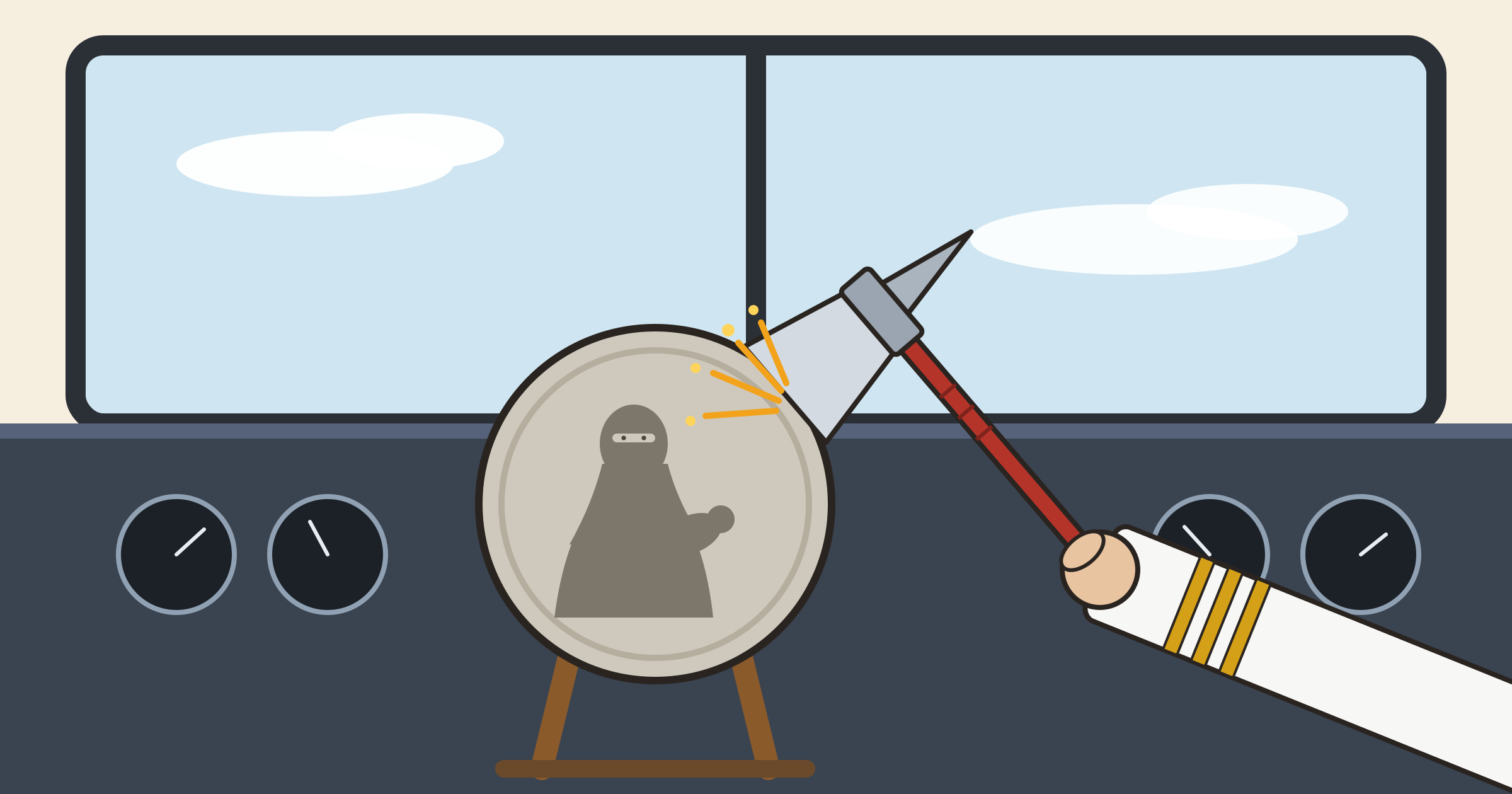
Wednesday’s attack on Flydubai flight 1073 returns to the blade. The UAE attorney general says the Omani copilot struck the captain with the cockpit’s emergency axe. Crash axes are standard cockpit equipment, and a skeptic will say he used what lay to hand. The standard one is about fifteen inches of drop-forged steel, with a blade on one side and a pick on the other and a rubber handle insulated against live wiring: a pickaxe in miniature. But of everything within reach, the hand closed on a blade. Tabar, the Persian word for axe, is the root of tatbir. Pickaxe Mountain takes its name from the same gesture, the blow that breaks open what is armored. At Har Nof in 2014, two men attacked worshippers at morning prayers with axes, meat cleavers and a gun.
The contact is the point. Making part objects of the human body is a known phenomenon in serial killing. Barrie Biven, analyzing a killer’s tableau, observed that “The dismantling of the body was so extensive as to rob it of humanness” (Biven, 1997). Part objects are a representation of the mother’s body before the baby has an integrated picture of her. Years ago I wrote about serial killers, whose mutilation of the victim’s body I read as an attack on the body of the mother: the rage of a self that could not separate from her and cannot stop destroying what stands in for her (Kobrin, 2007). Beheading and dismemberment belong to the same family. The head symbolizes the mother’s body, and cutting it off is an attempt to eradicate her identity and be set free from her. Abu Musab al-Zarqawi mourned his mother for forty days and then launched his beheading campaign (Kobrin, 2013). A group that licenses the act turns a solitary perversion into a sanctioned rite, but it does not change what is being cut. I followed the same logic in A Soldier’s Guide to Hamas’s Genocidal Psychosis and in The Jihadi Dictionary. A blade does what a bullet cannot: it opens the body. The Arabic word for conquest, fath, means an opening.
The tradition knows whose body that is. The same Prophet who said that Paradise lies under the shades of swords is reported to have answered a man who asked permission to go and fight: “Do you have a mother?” Yes. “Then stay with her, for Paradise is beneath her feet” (Sunan an-Nasa’i 3104). Two Paradises, one under the sword and one under the mother, and the jihadi who takes up the blade has chosen between them.
Frances Tustin named the phenomenon autistic objects: hard, sensation-giving things a mind clutches to seal off a world it cannot bear to feel. It is a technical term for a defense, not a description of people with autism. A weapon of this kind is not a tool. A tool can be laid down. A psychic prosthesis cannot, because the self has grown around it. That is why Hamas refuses to disarm, and why a man with a rifle also carries a sword: the rifle does the killing, and the blade holds the boundary of a self that never finished forming one.
If the sword is the hard object that jihadi minds cannot put down, the states that fly it are not neutral bystanders. Saudi Arabia’s flag carries the shahada over a sword, and the kingdom executed a record 356 people in 2025, up from 338 the year before, with beheading by sword still its usual method. The same kingdom’s agents killed the journalist Jamal Khashoggi inside its Istanbul consulate in 2018; a UN investigator found a premeditated killing and, from Turkish recordings, the sound of a saw. His body was never found. Iran’s emblem builds the name of Allah out of a sword and four crescents. Oman’s emblem, on its flag, shows crossed swords and a khanjar. These are old emblems of justice and strength, and nobody should expect them to vanish overnight. But a campaign to wean young men off the image of the severed head is not helped by respectable states that set a blade beside the word of Allah. Redesigning a flag is a far smaller thing than disarming Hamas, and it is a step that Muslim governments could choose to take.
Which brings us back to the cockpit. Hamam al-Hammami, the Flydubai copilot, reportedly an Omani national who had once been banned from flying over suspected extremism, carried no rifle and no sword on his back. He did not need to. The emergency axe was within reach, and when the moment came his hand closed on the blade and went for the captain’s body. Avi Issacharoff asked why on earth a gunman would bring a sword to a kibbutz. The cockpit offers the same answer in miniature: a self like his reaches for the hard edge that cuts, because the body it needs to cut is not the one in front of him. Whether he was cutting only the captain, or enacting once more, like Zarqawi’s beheadings and the hackings to death of October 7, a rage displaced from his mother, only his unseen years can say.
The question was never why a gunman needs a sword, or why a copilot reaches for an axe. It is why a self needs one.
Reference: Nancy Kobrin, “Political Serial Killing by Proxy: Christian Ganczarski the chief perpetrator, Nizar Nawar his proxy and the Djerba Synagogue Bombing,” Anil Aggrawal’s Internet Journal of Forensic Medicine and Toxicology, Vol. 8, No. 2, July–December 2007. http://www.anilaggrawal.com/ij/vol_008_no_002/papers/paper001.html
Barrie M. Biven, “Dehumanization as an Enactment of Serial Killers: A Sadomasochistic Case Study,” Journal of Analytic Social Work, 4(2), 1997, 23–49.
Nancy Hartevelt Kobrin, The Jihadi Dictionary (Mamaroneck, NY: MultiEducator Press, 2016), entries “Body Parts,” “Part Objects,” “Fantasy,” “Acting Out.”
Nancy Hartevelt Kobrin, Penetrating the Terrorist Psyche (New York: MultiEducator, 2013), p. 136.
Nancy Hartevelt Kobrin, PhD, is a Tel Aviv–based psychoanalyst and counterterrorism scholar. https://www.amazon.com/Nancy-Kobrin/e/B002RF9D5Y