On Monday, October 12, agents from Homeland Security Investigations executed a court-authorized search warrant at the Washington home of Rep. Ilhan Omar. They took her phone, her passport, notebooks and computers. A grand jury in Minnesota has issued more than a dozen subpoenas, some to her relatives. The Justice Department has not said what crime it suspects, but according to the Wall Street Journal the question is whether she or her late father misstated her age on immigration papers decades ago, so that she could become a citizen through his naturalization, and the goal is to revoke her citizenship. Omar’s response came within hours: this was Trump targeting his “political enemies,” and she “will not be silenced.” Her campaign was soon raising money off the search: “I will not bow to fascist bullies.” Rep. Rashida Tlaib went further, describing the search as an attack on Omar, Somali Americans and Minnesotans.
That last move is the one I want to look at, because I have seen it before.
I lived in St. Paul for years. In the summer of 2005 I trained 320 Hennepin County Sheriff’s deputies on radical Islam, in groups of twenty, and Sheriff McGowan allowed me to conduct interviews in the Hennepin County jail. Somali gangs already existed then. In 2009 seven Somali men were killed in the Minneapolis area over ten months, and authorities believed fellow Somalis in gangs were responsible. Yet in my interviews, not one young man identified himself as a gang member. The group was there; the individual inside it was not.
Today the gangs are back in a new generation. Ramsey County Sheriff Bob Fletcher counts about twelve Somali gangs with roughly 300 members, tied to fourteen murders and more than a hundred shootings in two years, at graduations, at the State Fair, at a World Cup watch party. His own gang investigator says most of these crews do not sell drugs. They fight for bragging rights. Violence without material gain, announced in advance and staged for an audience, is violence in the service of honor.
And when the sheriff named the problem, community leaders and a Somali-born city councilman called his words dangerous. The Hennepin County Attorney denied the gangs exist at all. The response was not “these young men must answer for what they did.” It was “you are attacking us.”
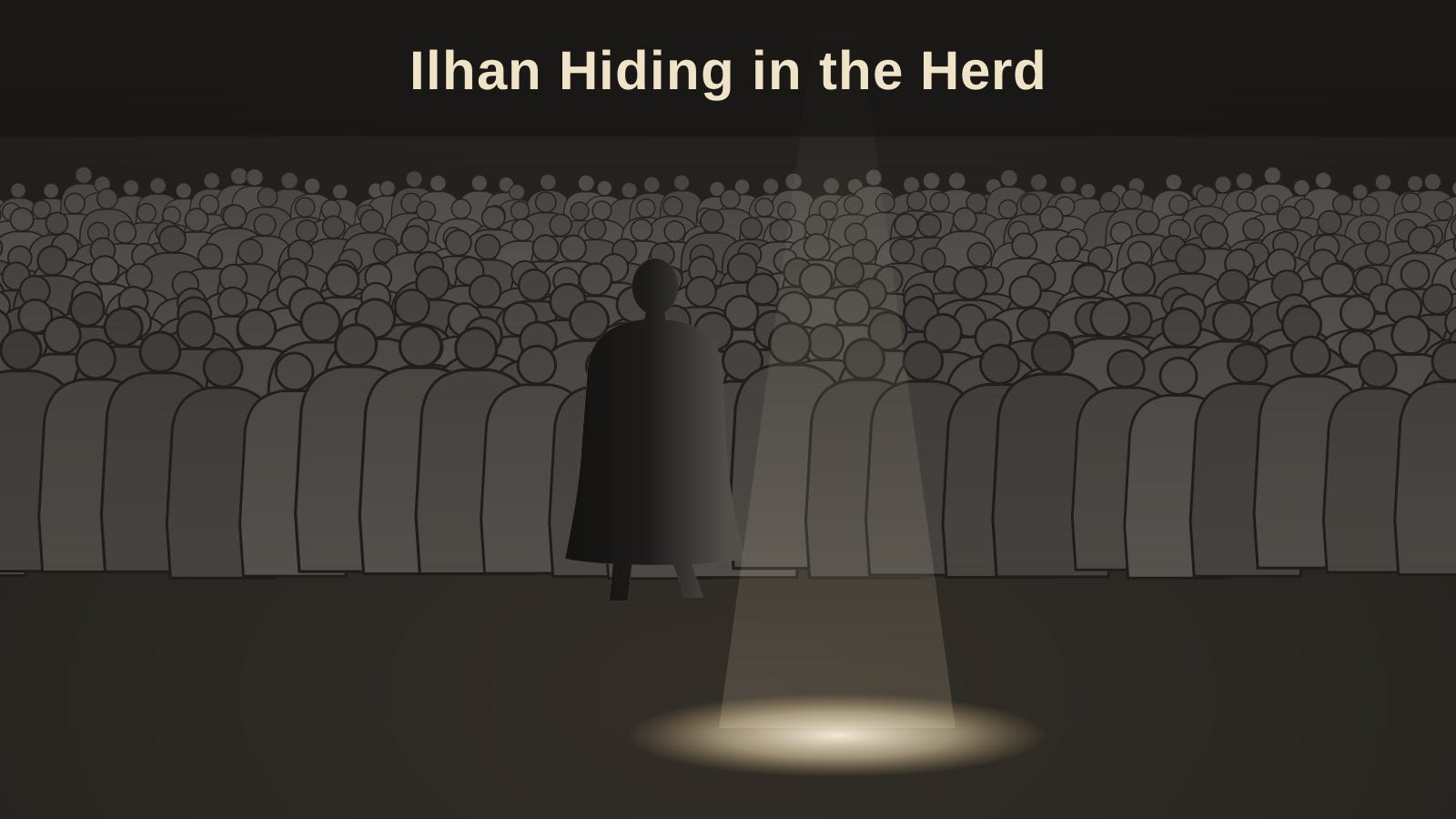
This is the logic of shame and honor. In a clan culture, honor belongs to the group, not the person. An individual’s wrongdoing is not his own; it stains the lineage. So the group closes ranks, the individual disappears into it, and anyone who asks a question becomes an enemy of the whole people. There is only the herd.
Psychoanalytically, this is a story about separation. Margaret Mahler described the process by which the infant slowly separates from the mother and becomes an individual self. Conscience, the capacity to hold oneself responsible, grows out of that separation. A person who is never permitted to stand apart cannot easily stand accountable. In a culture that punishes separation, conscience does not vanish. It goes underground. It becomes dangerous to express.
We can see it surface, at great cost, in the Somali women who brought forward a Minnesota bill this year for a task force on female genital mutilation, a felony in the state since 1994 that has never once been prosecuted. We see it in the survivor who told a reporter the practice survives through family pressure and silence. We see it in the Isaaq survivors in Somaliland who have spent decades documenting the genocide Siad Barre’s regime carried out against them. These are people who separated from the herd and paid for it.
Which brings me back to Ilhan Omar, because she is plainly capable of fierce individual assertion. She defies presidents, parties and colleagues with ease. Yet every time she is asked to account for something herself, she dissolves back into the collective.
Consider the questions she has been asked.
Her 2009 marriage to Ahmed Nur Said Elmi. Critics have claimed for years that he is her brother and the marriage was an immigration fraud. She calls this a disgusting lie. No court has found otherwise, and no agency has published proof. But a 2019 Washington Examiner investigation found dozens of documents with discrepancies in her marriage statements, and in seven years she has never put the matter to rest with the simple evidence any individual could produce. A question this old should have been settled long ago.
Her age. According to emails reviewed by the New York Post, her staff moved her listed birth year from 1981 to 1982 in May 2019. In 2018 she told The Intercept she became a citizen before she turned 18, through her father’s naturalization. One year is the difference between qualifying for that route to citizenship and not. To be fair, the Biden administration looked at the same allegation and dropped it for lack of evidence, and stripping someone of citizenship is a hard case to win in court. If the problem lies in what her father wrote on her behalf, the child cannot be blamed for it. The adult can be asked about it.
Feeding Our Future, the largest pandemic fraud in the country, stole hundreds of millions meant for hungry children in her own state. There is no public evidence she took part in it. But a Minnesota House oversight report found that her MEALS Act loosened the rules that fraudsters exploited, and when the committee invited her to testify about what she knew, she never answered.
Her finances. Her 2024 disclosure showed a household worth between $6 million and $30 million, up from almost nothing, nearly all of it from her husband Tim Mynett’s venture firm and winery. When the House Oversight Committee asked for the companies’ records, Mynett did not comply, and the matter was referred to the Ethics Committee. She then amended the filing, blaming her accountant, and the firm’s value dropped to zero. Jeanine Pirro, the U.S. Attorney in Washington, now says her office is examining those disclosures as well.
Her father. In her memoir she called Nur Omar Mohamed an educator. Her own community’s newspaper, Sahan Journal, remembered him differently when he died in 2020: a Soviet-trained colonel who commanded a regiment in the 1977–78 war with Ethiopia and served in Siad Barre’s army until the regime fell in 1991, the army that leveled Hargeisa and Burao. There is no documented evidence that he personally took part in the Isaaq genocide, and I will not claim it. But she has never reckoned in public with the regime her family served, even as Isaaq survivors live in her own district.
And her loyalties. In January 2024 she addressed Somali Americans in Minneapolis in Somali. Whether she said “Somali first, Muslim second” is disputed. But in the translation she herself endorsed, she told the audience the U.S. government will do what we ask it to do, and that while she is in Congress, no one will take Somalia’s sea. When Israel recognized Somaliland in December 2025, she opposed it and claimed Israel wanted the territory to displace Gazans. (I should disclose that I am research director of the Israel-Somaliland Friendship Association, that I sit on the board of the MAAN Institute for Diplomacy and Global Affairs in Hargeisa, and that I have visited Hargeisa at the official invitation of the Somaliland government.)
Each of these is a question for one woman. Each time, the answer comes back in the first person plural: they are attacking us, our community, our people. The individual steps behind the clan, and the clan absorbs the question.
The search of her home may produce charges or may produce nothing. That is for the courts. If the papers at the center of the case were her father’s, she did not write them. But she has had decades, and a seat in Congress, to answer for them, and she has answered every question as an attack on her people. The pattern is already visible. A member of Congress swears an oath as an individual, and she is accountable as one. Until she can answer for herself, rather than through the herd, she is asking a whole community to carry what is hers alone.
Nancy Hartevelt Kobrin, PhD, is a Tel Aviv–based psychoanalyst and counterterrorism scholar.
https://www.amazon.com/Nancy-Kobrin/e/B002RF9D5Y