This is the fourth text in a short series, written as I read Karen Elliott House’s biography, The Man Who Would Be King, and make my psychoanalytic associations in light of developmental psychology. If later reading changes my mind, I will say so.
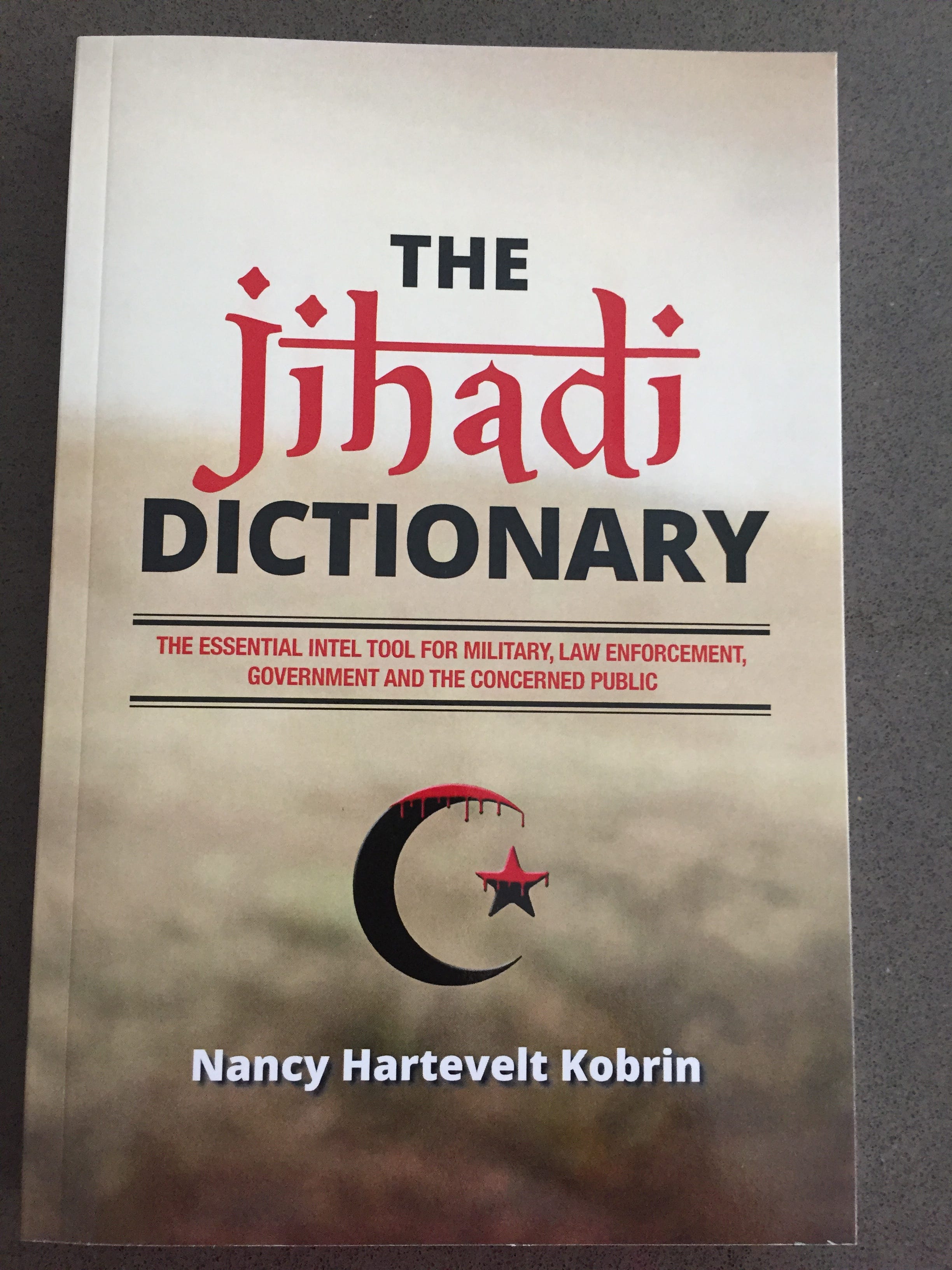
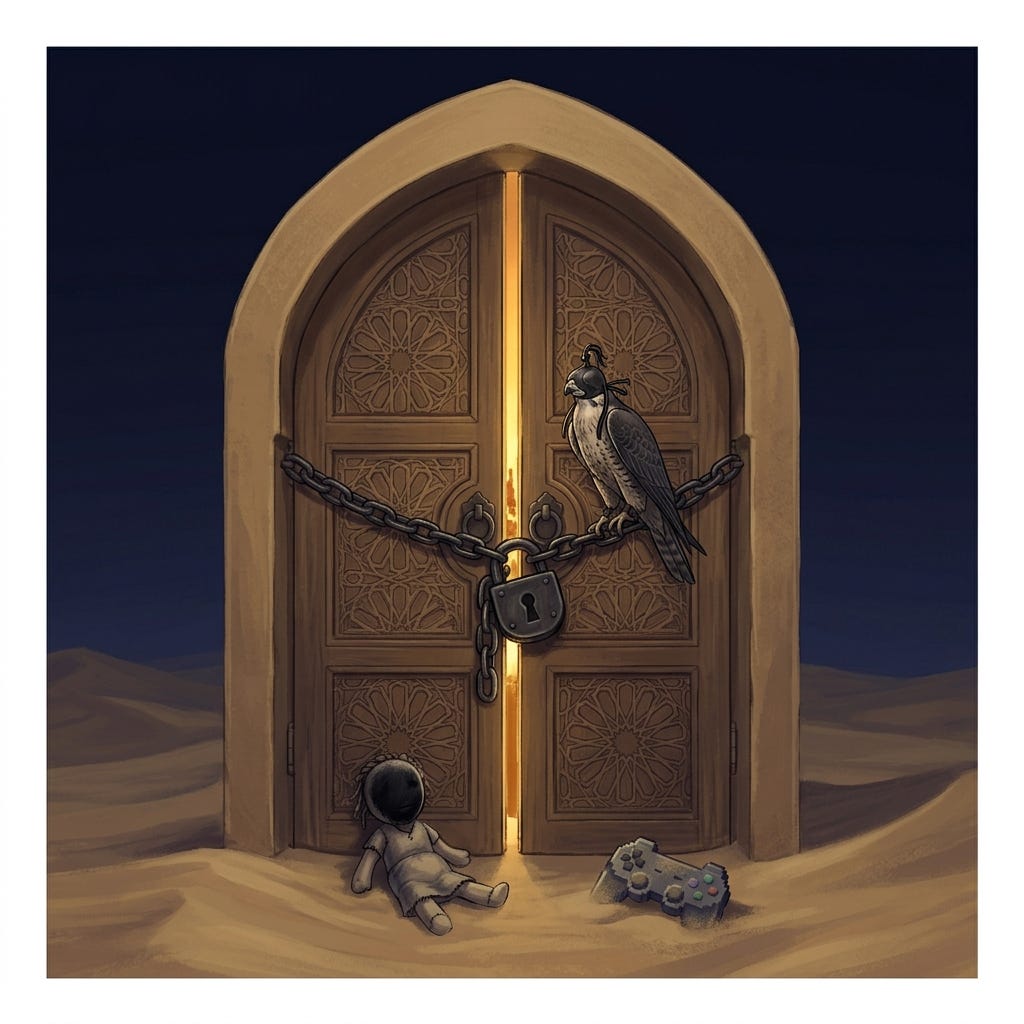
The doors. Chapter Two, “Kinder, Gentler Islam” (that is the wish), opens on November 20, 1979, in the Grand Mosque in Mecca. Militants seize it during prayer and all fifty-one doors are chained shut. “The huge crowd of men, women, and children were trapped” (p. 27). When the regime retakes the mosque, sixty-three of 170 captured militants are beheaded in eight cities across the kingdom (p. 27). House reports the trapping and the beheading as history. She does not ask what they mean. I do. Trapping people so they will behave, and cutting off a head, are not thoughts. They are what Bion called thoughts without a thinker, acted out in the body. “Off with her head” stays a phrase in Alice in Wonderland. Here it is carried through, because there is no space where it could stay a fantasy (Jihadi Dictionary, pp. 16, 90). Rebels and rulers use the same act, and the same act goes back centuries. The leader of the first Saudi state was beheaded in Constantinople, and “his body, gruesomely holding his severed head, was displayed for three days” (p. 29). Beheading is terrifying because all people have a need to carry in their thoughts and feelings an intact image of the mother’s body as a source of comfort. This is my interpretation.
No play. Real play needs room between the inside and the outside, where a child can try out a feeling and rework it in fantasy, as Winnicott showed. By the time MBS was born in 1985, “the religious grip had tightened further. Videogames like Pokémon were banned for promoting blasphemy and laziness. Importing dolls was banned because creating any human image is forbidden” (p. 30). No thought was given to the fact that dolls could help a child work through feelings about being in a family. That is play. Some officials even blacked out the king’s face on paper currency (p. 30). No dolls, no faces, no game. Where play is banned, humans risk becoming only objects to be manipulated and controlled, because no one was given the chance to develop empathy, the capacity to think and feel and walk in the shoes of the other, to understand their pain. Last time I wondered whether his Neo Geo was a teddy bear. I now think it is closer to what Frances Tustin called an autistic object: a hard, sensation-giving thing that shuts the world out and does not lead toward other people or culture. I use this as a description and not a diagnosis, as in my paper on Jihaditism. With no room for growth, everything stays concrete.
The split. House writes that “almost all Saudis lived dual lives” (p. 38). Outside the kingdom they “saw and lived normal lives only to return to a life of restriction and duplicity in their homeland; one standard preached, another practiced” (p. 38). Normal life exists only somewhere else, and at home you conform. Going back and forth is exhausting, and each return carries a devastating realization. These young Saudis, House says, “now knew they were living medieval lives compared to their contemporaries in the Arab Gulf and in the West” (p. 38). Medieval, in the twentieth century and into the twenty-first. I wondered if they felt cheated out of a real thinking and feeling life. Such splitting does not allow for an integration to promote stability. It is destabilizing.
Words. A colleague of mine has written that Muslims are unfit for modernity. I would not put it that way. What modernity requires is the ability to identify what you feel and put it into words. That is a developmental task, and it depends on a childhood that allows play. Where feelings cannot be named they are acted: a door chained, a head cut, a coercive not cohesive glue made of obedience. House describes a kingdom where “obedience is almost instinctive” and Saudis “checked in at birth and were served by others for life, with government paying the tab” (p. 35). The clerics demanded that everyone be the same, and difference was a threat. That is extreme narcissism.
The hawk. The falcon is a venerated Saudi symbol of flight, omnipotence and attack. After 1979 the regime turned to Sheikh Abdul Aziz bin Baz, “the kingdom’s most respected religious scholar” (p. 29), who ruled that the regime must be preserved to avoid chaos. His price: “No more movies. No more alcohol. No more women on television. No more gender-mixing anywhere. No more soccer to distract youth” (p. 29). No pleasure, simply put. But can one know the capacity for pleasure if one has been denied play? In Arabic and in Hebrew, baz is a hawk or falcon. Last time we met the falcon boy, hooded and tethered. Here is a sheikh named for a falcon, and one of the first acts of MBS and his father in 2016 was “to tether the religious police” (p. 38).
The hurry. MBS now pushes religion into the background and replaces it with “Saudi nationalism as the new glue binding Saudis to their ruler” (p. 28). “I don’t want to waste my time,” he told Time in 2018. “I am young... We want to do it now” (p. 38). Both are ideologies, and ideologies cover over the deeper problems. A ruler in a hurry can change the rules overnight. He cannot change in a decade whether a people can play and say what they feel. With the female held low and the male forbidden to separate from the mother, there is no separation-individuation, no chance to see the forest for the trees. Such fusion causes confusion. The underlying problems run deep, and security stays as concrete as the chained doors.
Sources:
House, Karen Elliott. The Man Who Would Be King (Harper, 2025), pp. 27-38.
Kobrin, Nancy Hartevelt. The Jihadi Dictionary (2016), pp. 16, 90.
Kobrin, Nancy Hartevelt, and Norman Simms. “Jihaditism? Parallels between Autism and Terrorism,” Mentalities/Mentalités 22(2) (2008).
Winnicott, D. W. Playing and Reality (1971).
Bion, W. R. “A Theory of Thinking,” International Journal of Psychoanalysis 43 (1962).
Tustin, Frances. Autistic States in Children (1981).
Wiktionary, “باز” (bāz, from Middle Persian, “hawk, falcon”).
Nancy Hartevelt Kobrin, PhD, is a Tel Aviv–based psychoanalyst and counterterrorism scholar.
https://www.amazon.com/Nancy-Kobrin/e/B002RF9D5Y