Chapter Twelve of Karen Elliott House’s The Man Who Would Be King is about Iran. I found it boring because I know the history. What matters is what the history leaves out.
House writes that for secular Europeans and Americans “it’s impossible to really understand the sectarian bitterness between the Shia of Iran and the Sunnis of Saudi Arabia.” It is hard to understand because the usual explanations are political: oil, nuclear programs, proxies. Early childhood rearing practices cannot explain it either, because the bitterness is carried by a whole culture. It is the bitterness of poor losers.
The Prophet died with no agreed successor. House notes that three of his first four successors were murdered, Ali among them. Shia means Shīʻatu ʻAli, the partisans of Ali. In my Jihadi Dictionary, Ali is the son-in-law who did not receive the inheritance, and the Shia “have remained poor losers.” Having been rejected, they have harbored a narcissistic blow to the group identity until this day. Iranians, House writes, see every caliph after Ali as a usurper, and Al Saud control of Mecca as the latest usurpation. An Iranian professor adds that Persians “will never forget their defeat at the hands of Arabs,” a fire that “keeps seething under the ashes.”
Psychoanalytically, this is the loss that was never mourned, as with the Prophet’s own death in Post 13. A loss that is not mourned is not over. It is passed down as a grievance, and the heirs go on feeling cheated. Klein called this envy: a part-object function that cannot tolerate that the other has what I should have had. It “does not allow outsiders in.” Envy is not jealousy. Jealousy fights a rival. Envy wants to spoil what the other has. Each side turns the other into the usurper. Even the Shia mourning never ends. On Ashura they cut their foreheads and flagellate themselves for Husayn, and the ritual keeps the wound open.
The same pattern shows in how Saudi Arabia treats its own Shia. House reports that in 2022 the government executed forty-one Shia men, allowed no final meeting with their families, and refused to return the bodies for funerals. Even the mourning was denied.
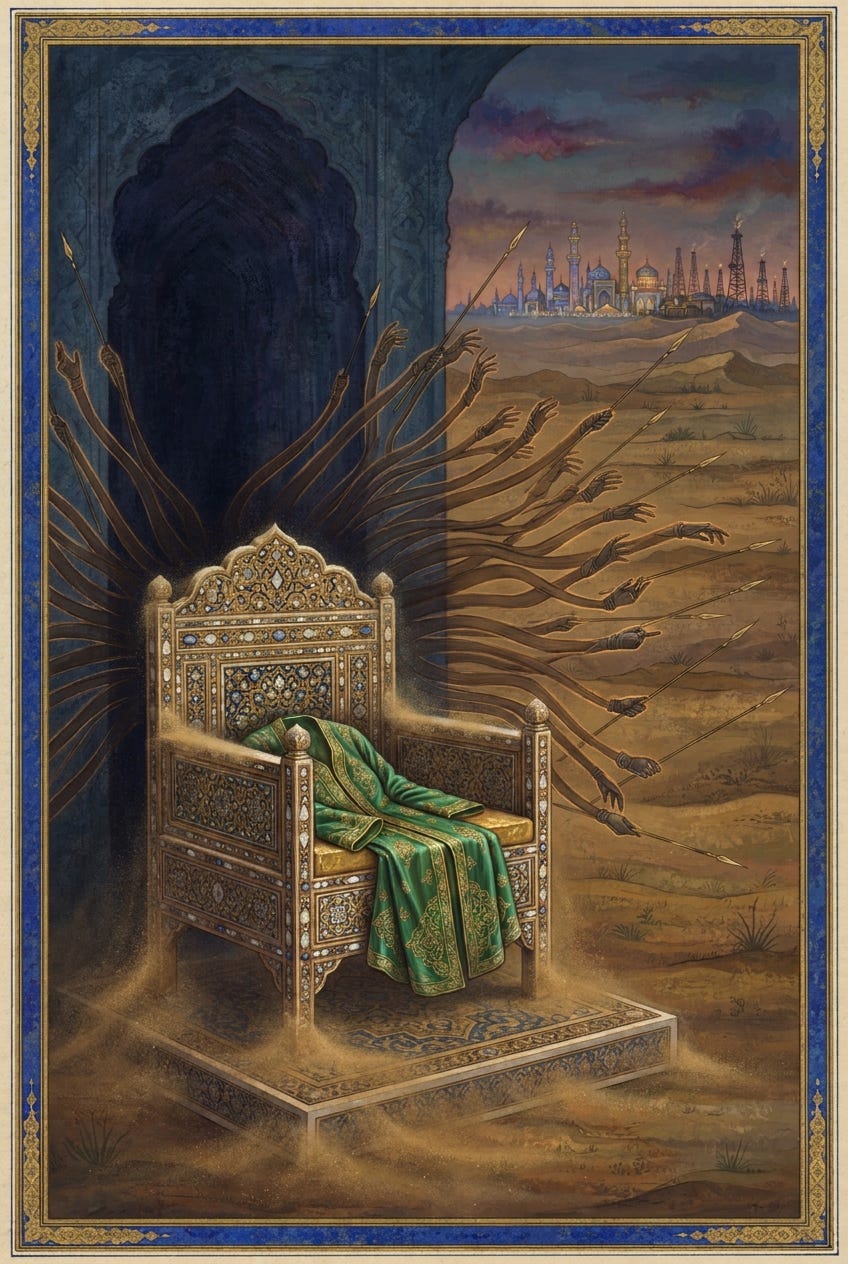
Iran does not carry out its own rage. It uses proxies. The proxy is the tip of the spear, and the hand that throws it stays hidden. Iran evacuates the toxic part of the group self into Hezbollah, the Houthis and Hamas, and lets them do the dirty work while Tehran keeps its hands clean. This is projective identification at the level of the state: the proxy becomes the container for what the group cannot hold. It is passive-aggressive, albeit lethal: پرخاشگری منفعلانه، هرچند مرگبار(parkhāshgari-ye enfe’ālāne, harchand margbār). The attack is denied, and the aggressor presents himself as a bystander. In Persian a proxy is niyābati, from niyābat, deputyship, the word used in Shia tradition for the deputies who spoke and acted for the Hidden Imam. The proxy is the deputy of an absent figure, as the Prophet and the unmourned Ali remain absent and the group’s rage is delegated to those who act in their place.
Notice the vocabulary: arms, tentacles, the head. In Arabic, Iran’s proxies are adhru’ Iran, Iran’s arms. Naftali Bennett, as Israel’s prime minister, described an “Octopus Doctrine”: no longer “play with the tentacles, with Iran’s proxies,” but go for the head. The language of proxy war is the language of body parts, and a body part is a part object, never a whole person with a mind of his own.
Iran did the same with its own children in the Iran-Iraq War. Khomeini gave them plastic keys to heaven and sent them ahead as human mine sweepers. The first proxies were the children of Persia, used against the Arabs. People dominated by primitive mental states often do to children what was done to them.
MBS reads reality as strategy. In 2023 he told House, “There is not a high chance of the U.S. intervening in Iran.” On February 28, 2026, the US and Israel struck Iran, and Ayatollah Khamenei was killed. MBS had called Khamenei the new Hitler. The Crown Prince was right about the man and wrong about America. Yet the strike is one event and the grievance is another. Killing the Supreme Leader did not touch the unmourned inheritance that feeds the feud.
When two siblings cannot settle who is the true heir, they often find a third party to blame. Iran calls America the Great Satan and Israel the Little Satan. Hatred of the Jew and Israel becomes the container for the unmourned loss. It is a very old defense, and a very efficient one.
House calls the 2023 Saudi-Iran détente “a desperate shotgun wedding,” not a marriage of love. In Post 12 I called the Saudi image makeover “wedding washing.” Here it is again: a pair forced together without any change inside either of them.
MBS wants to modernize Saudi Arabia while Iran, which he cannot absorb, still tells the story of the usurped inheritance. He can sign deals, build railways and talk to Tehran. Unless the root culture faces what it has not mourned, the feud is not over. It is only paused.
Sources:
House, K. E., 2025, The Man Who Would Be King: Mohammed bin Salman and the Transformation of Saudi Arabia, Harper, Chapter Twelve.
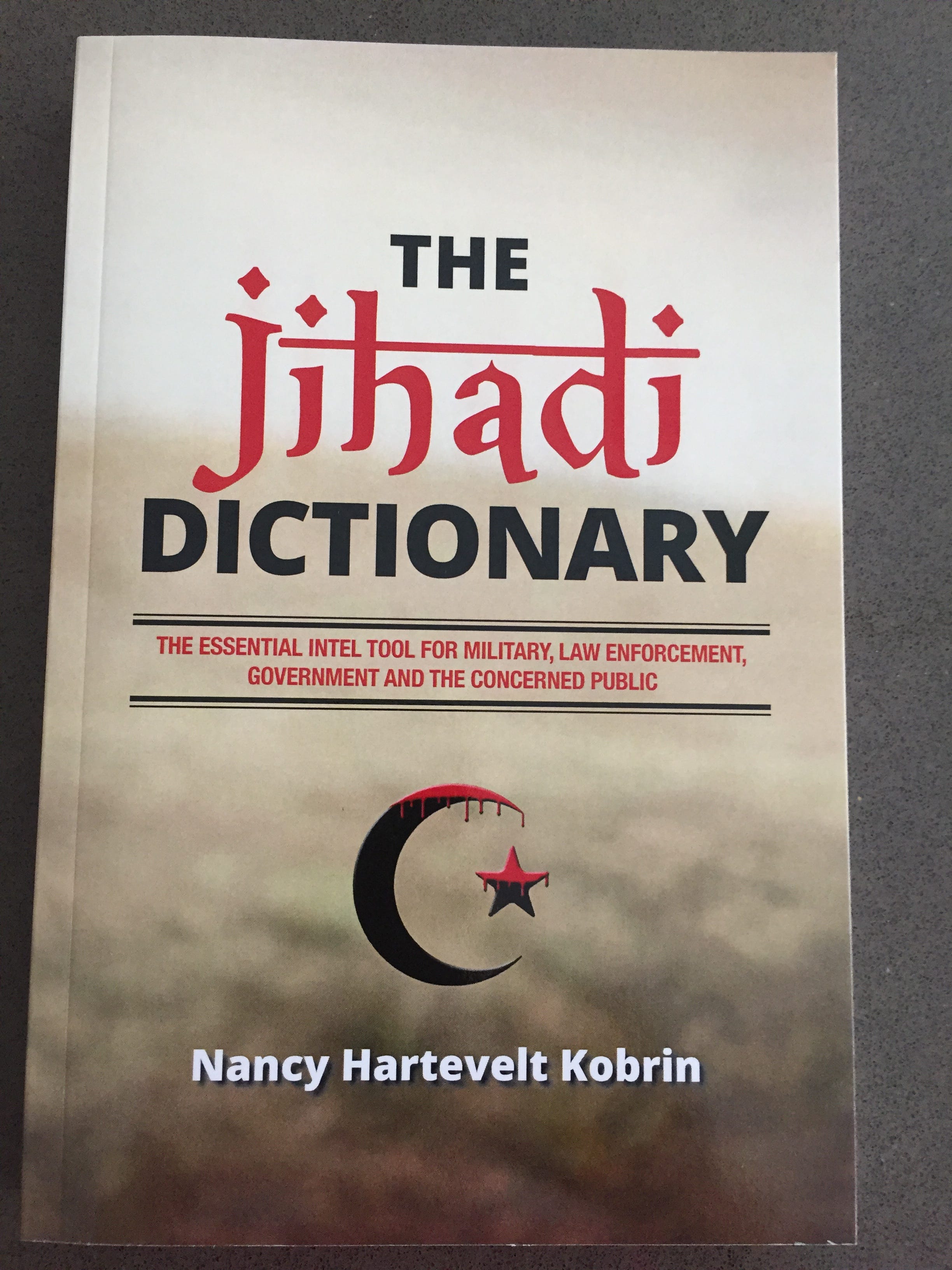
Kobrin, N. H., 2016, The Jihadi Dictionary, entries “Shia Islam” (pp. 227-228), “Envy” (pp. 88-89) and “Cutting” (p. 64-65).
Klein, M., 1957, Envy and Gratitude.
Bennett’s “Octopus Doctrine,” as reported by the Middle East Forum: https://www.meforum.org/israel-octopus-doctrine-is-a-sharp-warning-to-iran
Arab News: https://www.arabnews.com/node/2246486
NPR, Feb 28 2026: https://www.npr.org/2026/02/28/nx-s1-5730158/israel-iran-strikes-trump
PBS NewsHour, Feb 28 2026: https://www.pbs.org/newshour/world/trump-says-iranian-supreme-leader-ali-khamenei-killed-in-u-s-israeli-strikes
Nancy Hartevelt Kobrin, PhD, is a Tel Aviv-based psychoanalyst and counterterrorism scholar.
https://www.amazon.com/Nancy-Kobrin/e/B002RF9D5Y