Chapter Six of Karen Elliott House’s The Man Who Would Be King is called “Women Win,” and she opens with a large claim: “MBS has significantly ended female dependence on men.” I am not convinced. I do believe change will come through the women. Women now drive, work and keep their own earnings, and a sixteen-year-old tells her father, “I am going to be more successful than you.” But in the pages I read, there is little about what this does to the men and to the patriarchal structure above them. My psychoanalytic associations, in light of developmental psychology, say this is window dressing, a veneer over a structure that has not moved. A top down approach such as the Crown Prince’s only helps a bit. The problem is much deeper.
The Prayer Over the Camel: Splitting and Projection
House quotes the prayer a groom offers on his wedding night, the same one he is told to say when buying a camel: “Oh Allah, I ask you for the goodness that You have made her inclined toward and I take refuge with You from the evil within her and the evil that You have made her inclined toward.” The woman is a possession with evil inside her. Behind this prayer stands the idea of fitna, the woman as a source of temptation and disorder, whose body threatens the social order and so must be covered, segregated and guarded. This is splitting and projection in a cultural form. The mother is divided into the good one who serves and the bad one who tempts, and the man’s own desire is placed inside her, where it can be guarded against. The guarding is called protection. A boy raised inside this prayer learns very early to fear the body that bore him. I have written about the shame-honor culture in which the maternal bond is destroyed, and this prayer is one of its daily rituals. A decree allowing women to drive does not touch it.
Window Dressing: False Self
Winnicott described the false self, a compliant facade that protects what is underneath by showing the world what it wants to see. A kingdom can have one too. Women in abayas the color of pastel, women pilots, women hostesses and a woman astronaut make a splendid display. House herself notes that MBS presents the change as an economic opportunity, not a feminist luxury. That tells us what it is for. It is for Vision 2030, for a labor force that now includes half the population. It is good that they are driving and working. It is a reform of the display window.
Where Are the Men: Disavowal
A father who controlled his daughter’s every move until she passed to a husband did not change because a decree said so. House quotes a man who told a woman colleague he did not know how to treat her, because she was the first woman other than his wife and mother he had ever met. These men were raised by women inside the system, and no one asks what becomes of them. A society cannot change half of itself. If the men are not changing, the freedom of the women depends on the Crown Prince’s good will. And what the ruler grants, the ruler can take back. The conservative House quotes in this chapter said it: “This change isn’t from the people. It can’t last.”
Whiplash: Reversal
I associate to Afghanistan. For twenty years girls went to school and women worked as judges, doctors and members of parliament. The Americans left in August 2021, the Taliban returned, and within months girls were barred from secondary school and women from universities and most jobs. Those gains had been supported from outside and from above, and the men of the society had not changed. Saudi Arabia is a different case, because the state itself is the source of the change, and no army will leave. But the structure is the same. If the Crown Prince is gone or loses his nerve, a conservative successor, or an angry religious establishment, could reverse everything with the same speed with which it was granted. A country that turned sharply conservative in 1979 and sharply open after 2016 can swing back. Only when the fathers, brothers and husbands have changed will it stay.
Something Is Rotten: Persecutory Anxiety
House says the women closest to him are almost invisible: his mother, his wife, his sisters. House appears not to have spoken with them. Her sources are the Crown Prince, his brother Prince Khalid and others close to the family. She reports that U.S. officials say he kept his mother a palace prisoner and told his father she was receiving medical treatment in New York, which the officials knew was not true. I do not know if it is true, and neither does House. But a man who frees millions of women and keeps his own family out of sight is a man who fears something. INSS analysts write of internal tensions among embittered populations, the security forces and even the royal house itself. Yet in a 2024 meeting with U.S. lawmakers he reportedly said it was his effort at normalization with Israel that put his life at risk. That is like blaming the Jew. The danger is inside the kingdom, and he places it outside, on the oldest outside persecutor there is. In Klein’s terms, this is persecutory anxiety. The danger is everywhere, so the people he loves must be hidden. Something is rotten in the state of Denmark.
Second-Class: Dhimmitude
Dhimmitude is the historic status of non-Muslims under Islamic rule: protected, tolerated, and below. The root dh-m-m also means to blame. A modern kingdom that wants tourists, investors and normalization has to say what it will do with this status. The kingdom still does not permit public non-Muslim worship. And what is the place of the Jews, in a country where public opinion, as Guzansky writes, sets red lines on Israel? House celebrates women’s freedom to be seen in restaurants. I ask who else may be seen. There is an older idea underneath, which Otto Weininger put in print in 1903 and which runs through antisemitic imagery: the Jew is unconsciously felt to be female. If woman is fitna, to be covered, guarded and kept in her place, then the Jew, felt as female, receives the same treatment.
The Mistress: Disavowed Object
Here is how I see the Saudi relationship with Israel. MBS shares intelligence and takes advice, but in private. In public there is no acknowledgment, no equal standing, no marriage. That is how a man treats a mistress. She is useful and kept out of sight, and he does not appear with her. A mistress is like a concubine — the other woman, the one he can use and deny. This is not a basis for normalization. It is a splitting of Israel into the useful part he will use at night and the shameful part he cannot show at his table.
The Men’s Club: Manic Defense
On August 7, 2026, MBS signed the Mecca pact with Pakistan and Turkey, an alliance in which an attack on one is an attack on all. I find it hard to take seriously, and commentators noted that when the Houthis attacked Saudi Arabia, neither partner responded militarily. Look at his partners. Turkey withdrew from the Istanbul Convention on violence against women in 2021. Pakistan persecutes the Ahmadis and enforces blasphemy laws against its minorities. A man who says he is freeing women and opening to the world forms his main alliance with states that do neither. In Klein’s terms this is a manic defense, a show of strength to deny vulnerability. It does not answer the question of what Saudi Arabia is, in a world where its women and its minorities remain at the margin.
The Foreign Workers: Displacement
House reports 2.3 million Saudis in private sector jobs and 8.87 million foreigners, with another 3.5 million, mostly women, working as domestic helpers in homes. The liberated Saudi woman goes to work and the foreign woman stays in her house. A freedom that depends on another woman’s lack of freedom is not a reform of the structure. It shifts the burden to someone else.
Change Through the Women: Hope
I still believe the women will do it. A woman who earns her own money, and keeps it, has her own mind. The next step is for the men, the foreign workers and the non-Muslims to come inside the circle of this freedom. That would be a reform I would call by its name.
Sources
House, Karen Elliott. The Man Who Would Be King (Harper, 2025), Chapter Six, “Women Win,” p. [ ].
Guzansky, Yoel, and Tomer Barak. “Saudi Security: Increasing Challenges alongside Strategic Limitations.” INSS Special Publication, August 24, 2021.
Guzansky, Yoel. “Saudi Arabia’s New Approach to Israel and the Normalization Process.” INSS Insight No. 2103, February 23, 2026.
Mecca Defence Alliance (signed August 7, 2026; ratified October to November 2026). Wikipedia, accessed November 16, 2026.
Weininger, Otto. Sex and Character (1903).
Winnicott, Donald. “Ego Distortion in Terms of the True and False Self” (1960).
Klein, Melanie. “Notes on Some Schizoid Mechanisms” (1946).
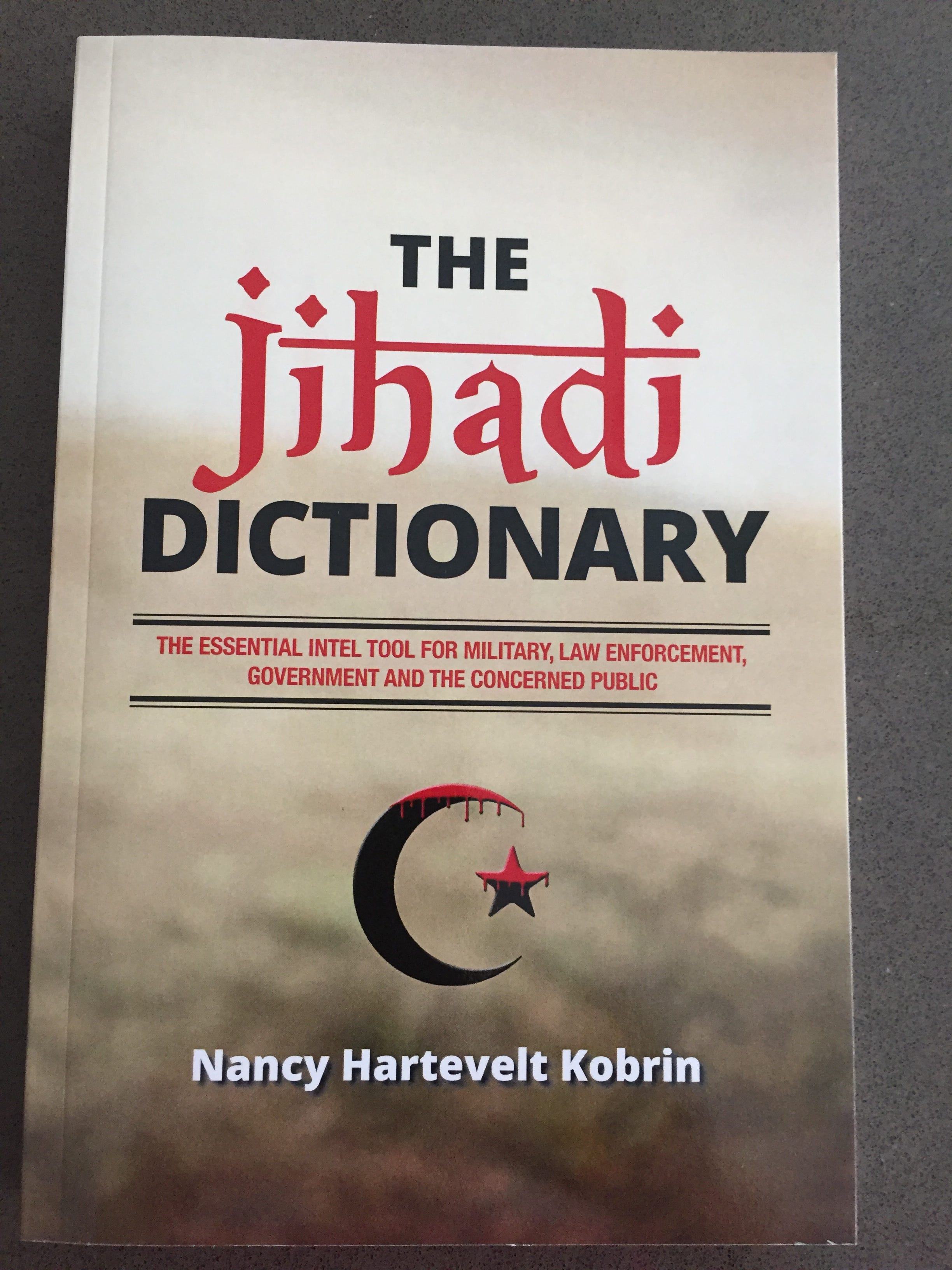
Kobrin, Nancy Hartevelt. The Jihadi Dictionary.
Nancy Hartevelt Kobrin, PhD, is a Tel Aviv–based psychoanalyst and counterterrorism scholar.
https://www.amazon.com/Nancy-Kobrin/e/B002RF9D5Y