House closes her biography with an Epilogue, “The Once and Future King,” and asks whether MBS is “a transformative historical figure or just another Arab tyrant? Or some of both?” She answers by comparing him with Saladin, Ataturk, Augustus, Peter the Great, Napoleon and Lee Kuan Yew.
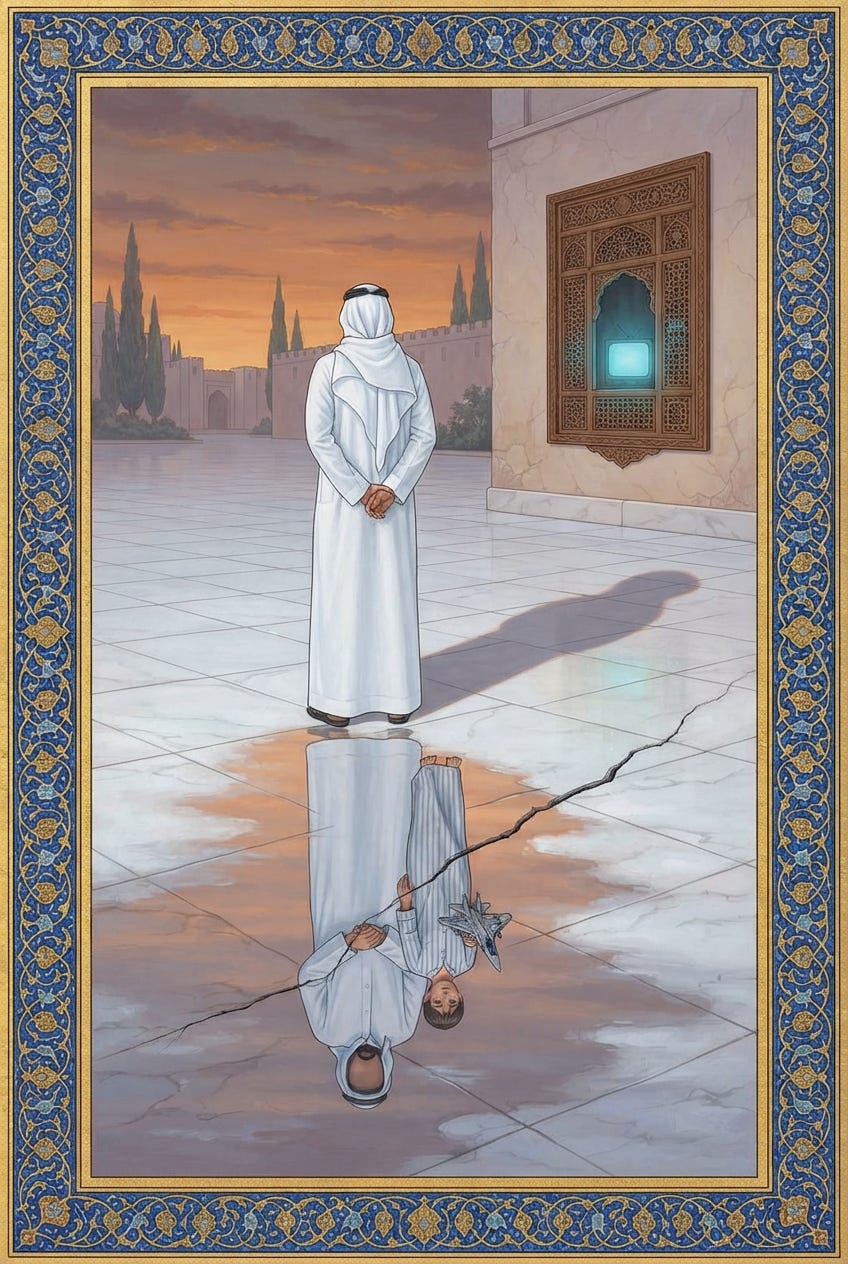
House deserves credit. Without meaning to, she offers up interesting tidbits about what goes on behind the veil in the kingdom: three childhood bedrooms kept like museums, an Apple TV to fall asleep to, a brother who had to become the father. Those details are what made this series worth writing.
However, I do think this is a weak way to end the book. Setting a man beside rulers from other times and cultures tells us little, because not all cultural practices are portable or transferable to other cultures. Western culture values separation-individuation. On the surface MBS looks individuated: “I love my father but I am not him,” he tells her. But who knows? Once again we have splitting. He tells House little about what he dislikes in his father. Is it culturally unacceptable in a shame-honor culture to criticize one’s father? His quick movement appears manic, with bursts of rage and immaturity, and much is kept hidden.
MBS deserves credit too. House shows that MBS has reined in religious domination, taken on corruption, and opened careers to women, and these are real changes that matter. But credit for what is visible is not an answer to what lies buried deep in the unconscious.
Until the Saudis ask psychological questions of the unconscious, the picture stays on the surface. What led a ruler to sire forty-five sons? A super sperm spreader is working through some kind of fantasy, and a very angry and very grandiose one at that. A family that grew from that fantasy now counts its sons and hides its women.
The position of the female remains horrendous. They live in a kingdom that still beheads. In the biography the female still remains secluded, and the women who now work out by running in the streets are topical and cosmetic. Authoritarianism blinds him from seeing more clearly, because he cannot see without the mania.
“If you see something to do, do it.” That philosophy acts out the power relationship instead of holding on to one’s anxieties. It is very important to learn to sit with one’s terrors and anxieties and to know them well before getting swept up in the illusion of reform.
Until that is asked, the marble is only a surface. With this post, the serialization of my critique of House’s biography is complete. I have enjoyed reading and interpreting her biography of MBS. I welcome topics that you, the reader, would like explored in this Substack.
Sources: House, Karen Elliott. The Man Who Would Be King, Epilogue. Mahler, Margaret S., Fred Pine, and Anni Bergman. The Psychological Birth of the Human Infant. New York: Basic Books, 1975.
Nancy Hartevelt Kobrin, PhD, is a Tel Aviv–based psychoanalyst and counterterrorism scholar. https://www.amazon.com/Nancy-Kobrin/e/B002RF9D5Y