Chapter Four of Karen Elliott House’s The Man Who Would Be King, “Early Omens,” opens with the Crown Prince facing a fiscal crisis in the fall of 2016: oil revenues had fallen by half, the deficit stood at $100 billion, and MBS cut salaries, bonuses and “benefits” for government workers. My psychoanalytic associations, in light of developmental psychology, go to money, greed, an abrupt weaning from the “milk” of oil, anxiety and distress, and the ground shifting like the winds of Arabia. No stability. A child needs stability before it can play, and that is the thread through everything below because such a child grows up to lack stability.
Christmas Every Day: Dependency
For decades the government layered some 260 “benefits” onto salaries, one for typing, one for using a computer. When MBS cut them, the average Saudi’s income fell by 50 percent, and 65 percent of Saudis work for the government. A Saudi economist said: “We had Christmas every day and Grinch has stolen it.” I think of a population cared for from above for a very long time, as if it were a child, and then weaned without warning. An unhealthy dependency had been created. Then the civil service minister went on television to say that government employees worked “only an hour a day,” a scolding from the one who spoiled them.
The Al Saud family’s net worth is estimated at $1.4 trillion, sixteen times that of the British royal family. In contrast I keep thinking about the Israeli Russian pensioner taxi driver who told me, “We come into this world with nothing and we leave with nothing. We are all equal.” Money can’t buy vibrancy.
Whiplash: Instability
MBS’s way of handling the crisis, House writes, was “Study the data, if any exists, but act boldly. If you make a mistake, you can fix it.” Think of his launching of the 2015 war with the Houthis in Yemen. In a shame-honor culture a new leader must strike first. Years later the problem is not fixed.
Seven months after the cuts, on April 22, 2017, the king restored “all allowances, financial benefits, and bonuses” and fired the civil service minister who had insulted Saudi workers. The deputy crown prince, of course, was not fired. House calls it a Scylla-and-Charybdis choice, but the pattern I notice is whiplash. First the benefits are taken, then given back, then prices rise again, with an 80 percent hike in gasoline, tripled electricity prices and the kingdom’s first tax, a 5 percent VAT, in 2018.
It is the unpredictability that a child cannot bear, and the Saudis House spoke to, as adults, described relief mixed with anxiety. One said: “It’s like being in the back seat of a speeding car. You can’t see where you are going. You just pray the driver won’t crash.” Lest we forget, in an earlier chapter we learned that MBS crashed his first car, the orange Maserati, on the day he got it.
Mr. Everything: Omnipotence
Saudis call him “Mr. Everything,” because he runs the economy, defense and Aramco. Complete control does not guarantee or engineer the outcome. House reports that four health ministers were rotated in two years, and that one of them learned he had been fired by watching the announcement on television. When one person has to do everything, everyone else waits to be told. The slippery slope of this is that threat and mandating become the norm, which is the essence of a shame-honor culture: bullying or submission. The omnipotence he is credited with is a burden to bear. One can’t do everything all the time and do it well.
The Vibrant Society You Cannot Order: Deadness
Vision 2030 calls for a “vibrant society” and for 40 percent of Saudis to exercise weekly by 2030, up from 13 percent in 2015. Princess Reema, who ran women’s sports, recounts how MBS summoned her and said: “I want to see women running in the streets. Why don’t I see that?” In September 2018 he decreed physical education in all girls’ schools, with no exceptions, after clerics had warned that women’s sports lay “the first stones on the pathway to hell for our girls.” So it was written, House says, and so it was done. And women did begin to run, first in abayas and sneakers, then in tights.
I associated to the question under his question: What was his fantasy about wanting to see women running in the streets? Was he actually saying that the sense of boredom and emptiness needed to be filled by seeing the maternal active? Just a thought, especially since this is a patriarchal society in which people cannot get their psychological needs met since they are objectified. A wish for a vibrant society speaks of a feeling and fear of “deadness” due to not being recognized as an individual with their own sense of being. Analysts, following André Green, link such deadness to a mother who is present but psychologically absent. I do not claim to know what lies behind it in him, only that the emptiness is real and that it is a society’s problem as well as a person’s.
I admire the women. But you cannot mandate a vibrant society. Play, as Winnicott showed, appears where a child feels safe enough to be spontaneous, and spontaneity cannot be ordered. A population that has been told what to do for generations, and then ordered to be free, has no room to learn how.
The Tire: Self-Sufficiency
Prince Badr tells a story to show MBS’s humility. A tire blows out on the way back from an outing, and MBS calls a tow truck and rides in the cab with the Syrian driver, who does not know who he is. “He never called his security or his father’s security,” says Badr. “He just handled it.” Hadn’t his father taught him how to change a tire? Probably not, as a king’s son. But then I noticed “he never called his security or his father’s security.” Perhaps it was his quest to assert his own self-sufficiency? No matter how old we are, we are always trying to work through what was not put right in early childhood.
Cars run through this chapter, as they must in a kingdom built on oil: the speeding car whose passengers cannot see the road, the Maserati he crashed, the price of gasoline, the blown tire and the tow truck. A car is also an adult’s toy, a way of feeling alive. As the saying goes, the difference between men and boys is the price of their toys, and in a kingdom built on oil, the toys can be very expensive. But in each of these cars there is one driver, and everyone else is in the back seat.
An Omen: Magical Thinking
House adds that MBS is building a home in Al Ula, a region many fundamentalist Muslims believe is cursed by Allah, who they insist sent an earthquake and lightning to destroy its earlier dwellers for their idolatry. This crown prince, she says, is “unafraid of such omens.” I hear more in this than courage. An omen is magical thinking, the same kind of thinking as superstition and conspiracy theory, in which events come from hidden forces and not from causes that can be understood and named. This is the thinking left over from childhood. By refusing to fear the curse, MBS is trying to move his people away from that world. But people who cannot predict what comes next due to instability look for signs, and a society whose benefits, ministers and prices change overnight will keep reading omens. Fiscal repair can be done by decree. Stability cannot, and without it neither play nor vibrancy can begin.
Sources
House, Karen Elliott. The Man Who Would Be King (Harper, 2025), Chapter Four, “Early Omens,” beginning p. 57.
Winnicott, D. W. Playing and Reality (1971).
Green, A. “The Dead Mother,” in On Private Madness (1986).
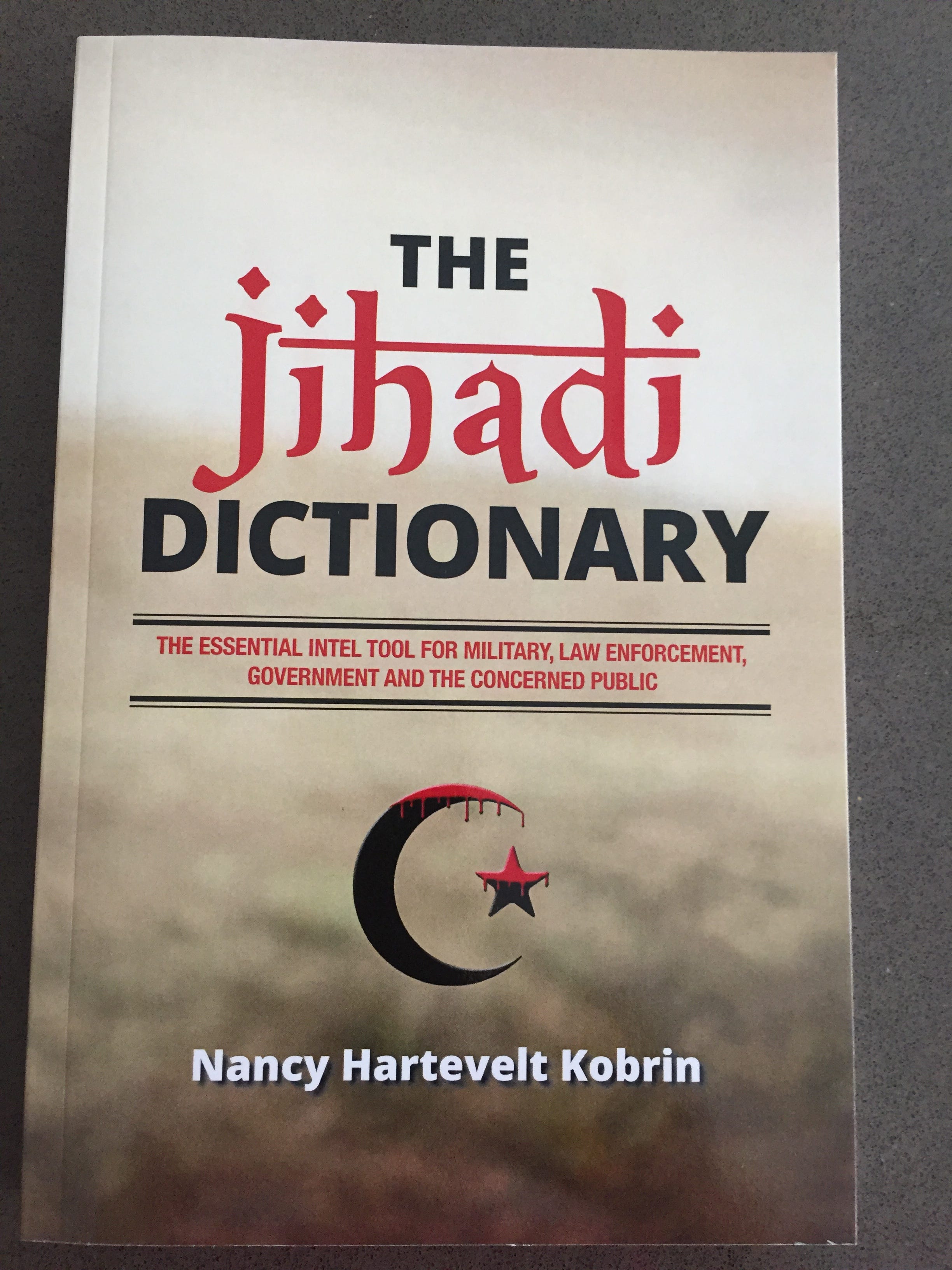
Nancy Hartevelt Kobrin, PhD, is a Tel Aviv–based psychoanalyst and counterterrorism scholar.
https://www.amazon.com/Nancy-Kobrin/e/B002RF9D5Y