

This is the second in a short series as I read Karen Elliott House’s biography The Man Who Would Be King and associate to it psychoanalytically. If later reading changes my mind, I will say so.
The cover. The title echoes Kipling’s novella about a man who is taken for a god and proves mortal. The cover shows only the left half of Mohammed bin Salman’s face, with one eye looking sideways, not at the reader. House writes (p. 13) that one purpose of her book is to “unmask.” The cover promises an unmasking and delivers a half-face. My psychoanalytic visual intelligence reads a split. I make no claim that he or House chose the image, since a designer made it.
The interviewers. Ben Hubbard of the New York Times wrote his 2020 biography without an interview. Reviews report that the prince declined, and the Saudis had stopped issuing Hubbard visas in 2018. House had more than half a dozen in-depth interviews. I read House as a maternal figure. She is my age, and this is an impression only. There are other explanations: decades of relationships in the kingdom, and Hubbard’s Khashoggi reporting. Still, a subject who chooses his biographer controls how much is unmasked.
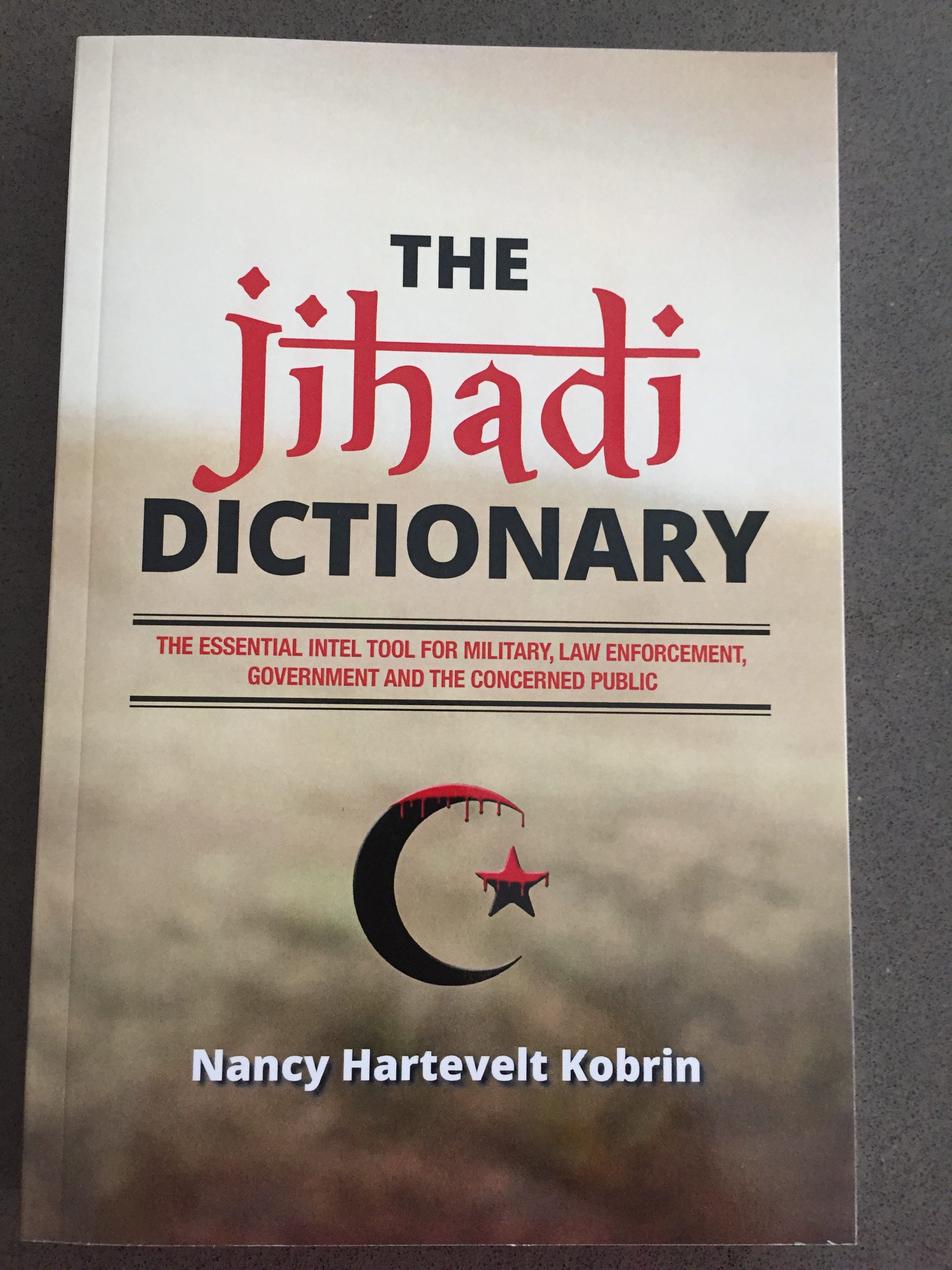
Object constancy: the concept of the day. Object constancy is the inner sense of a mother who is there even when she is absent. It grows out of a reliably available mother. In my Jihadi Dictionary I define constancy as the quality of staying the same, of being steadfast, and I note its root in the Old French for “steadfastness, permanence” (Kobrin 2016, p. 171).
Now picture the household. A man has several wives. There are many full siblings and half siblings, each set with its own mother, and the children are ranked. Males hold the “rights,” and females are subordinate. For the husband, polygyny spreads risk, so he does not put all his eggs in one basket. For a child it is utterly confusing. Where do I fit? Which mother is mine to count on? How do I get my needs met? A son’s standing depends on his mother’s rank, and that rank can change.
In the Dictionary I wrote about this pattern, drawing on my clinical work: “There is no way that a mother with ten children can adequately nurture emotionally all of her children.” My patients from very large families, of many faiths, all described the same thing: utter chaos, a poor ability to form stable bonds, and a sense of place “completely dictated by who had more power.” One of them “could not even find a shelf to call their own.” I applied this to the polygamous households with half siblings too (Kobrin 2016, p. 171, quoting Kobrin 2010, p. 69). I do not say that all such homes are like that.
I do not yet know who actually raised him, his mother or nannies. I will report it as I keep reading, and it may change this picture.
Hubbard offers one clue about who was watching over him. A tutor of the young MBS recalls that the prince told him his mother thought the tutor was a real gentleman. At first the tutor could not understand how she would know that, since he had never met her. Then he realized she had been “watching” them through the surveillance video of the tutorials. A mother who watches her son through a camera is present and absent at once, always seeing and never there. He was always already under surveillance, and there was no freedom.
What can we learn from object constancy, or its lack? A person who lacks a steady inner mother has trouble holding steady attachments of any kind, to people, to plans, to allies. Loyalty does not stay put, so today’s favorite can become tomorrow’s enemy, and choices swing between extremes. I am not diagnosing MBS from a distance. I am asking whether his pattern of sudden reversals fits this picture: the Ritz-Carlton detentions of royals and businessmen, the abrupt pressure on Lebanon’s prime minister, the blockade of Qatar and then the reconciliation, the war in Yemen and then the opening to Iran, and the vast Neom plans that keep being reshaped. Then there is Mohammed bin Zayed of the UAE, long described as his mentor and the older brother figure who helped launch him, and then the break, a rivalry over oil, business and Yemen that has become public. Most recently, in August 2026, came the Mecca Pact, a mutual defense agreement with Turkey and Pakistan, in which an attack on one is an attack on all three: new partners and a new security map. Each shift has its own political logic. But the shifting itself makes it that much harder to be consistent, and it is also extremely exhausting. Add power to that, and a whole country feels it.
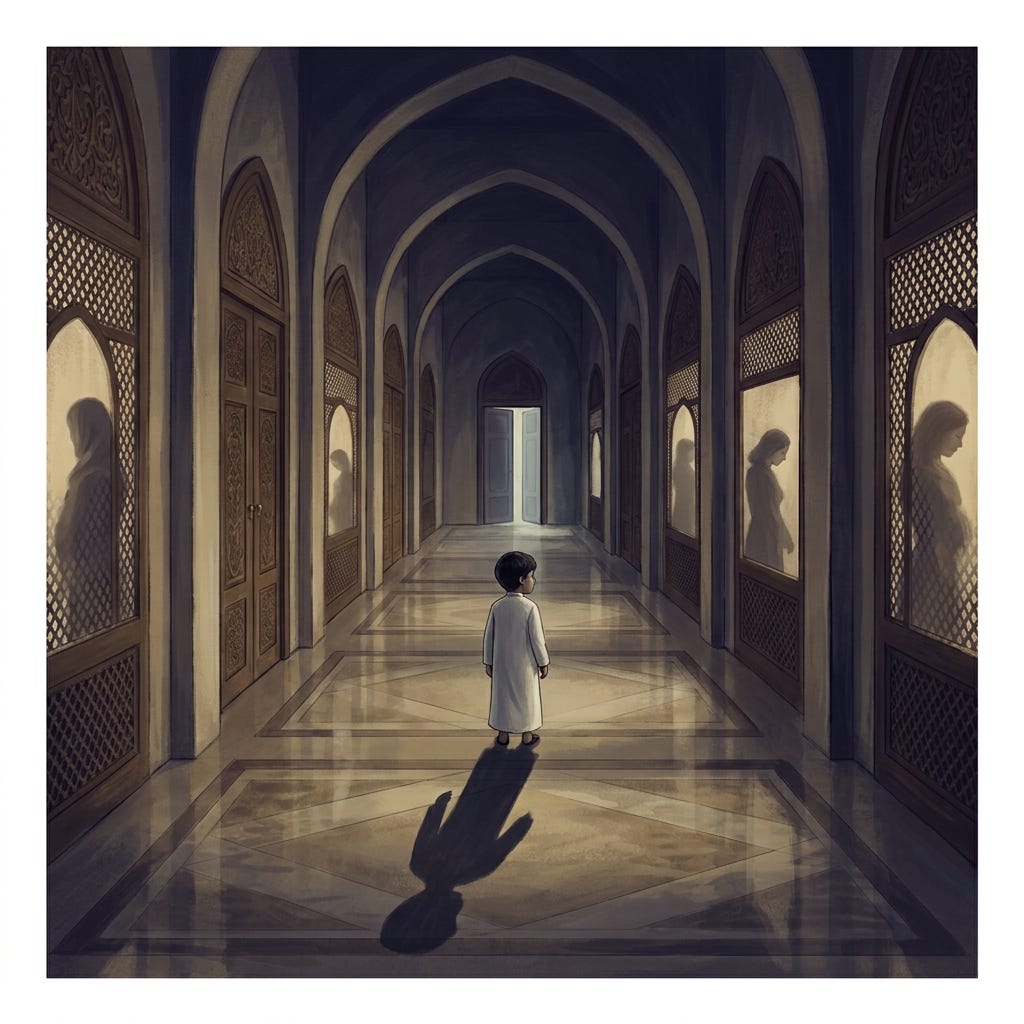
The unseen years. Object constancy is central to maternal attachment in the unseen years, from zero to three. It may help us understand the complicated nature of a shame-honor culture built around polygyny. That matters most in the sacred kingdom, with its two holy cities, Mecca and Medina, and the history of the Prophet Muhammad, which no other Arab country has.
Hurry. MBS has said he is in a hurry because the kingdom has lost a lot of time. I hear hurry as a defense against emptiness, as if he is “running on empty” in a country blessed with the gift of oil that will ultimately run out. That is a lot of pressure.
The hidden mother. In 2018, NBC reported that US officials said he had hidden his mother. Hubbard repeats the story (p. 58), and the Saudi embassy denied it. If it is true, a mother who cannot be seen is a mother kept constant by force, a house arrest of the one object who could not be counted on to stay.
It must be hard for us to understand the “shifting winds” of the Arabian desert. But this kind of knowledge, how a child’s earliest bonds shape the adult who rules, could be helpful in making the unpredictable more predictable.
Sources:
https://www.nysun.com/author/karen-elliott-house
https://www.newstatesman.com/?p=11853
https://bookmarks.reviews/reviews/mbs-the-rise-to-power-of-mohammed-bin-salman
https://www.belfercenter.org/research-analysis/man-who-would-be-king-new-book-karen-elliott-house
https://www.nbcnews.com/news/world/u-s-officials-saudi-crown-prince-has-hidden-his-mother-n847391
https://www.juancole.com/2021/07/bromance-between-breakup.html
https://www.caixinglobal.com/2023-07-20/the-best-of-frenemies-saudi-crown-prince-clashes-with-uae-president-102077731.html
https://www.malaymail.com/news/world/2026/01/03/best-of-frenemies-saudi-uae-rivalry-bursts-into-view/204016
https://www.studyiq.com/articles/mecca-agreement-2026/
House, Karen Elliott. The Man Who Would Be King (Harper, 2025), p. 13.
Hubbard, Ben. MBS: The Rise to Power of Mohammed bin Salman (2020), p. 58, and the tutor passage.
Kipling, Rudyard. The Man Who Would Be King (1888).
Kobrin, Nancy Hartevelt. The Jihadi Dictionary (2016), “Object Constancy,” p. 171.
Kobrin, Nancy Hartevelt. Penetrating the Terrorist Psyche (2010), p. 69.
Nancy Hartevelt Kobrin, PhD, is a Tel Aviv–based psychoanalyst and counterterrorism scholar.
https://www.amazon.com/Nancy-Kobrin/e/B002RF9D5Y
Your work is very interesting. I just purchased The Jihadi Dictionary.