

In 2008 I published “Jihaditism? Parallels between Autism and Terrorism” in Mentalities/Mentalités. I coined the word by fusing jihad with autism, to name the nonverbal behavior and imagery that jihadis produce and that investigators keep missing. I was careful then and I am careful now. I used autism “as a descriptor and metaphor,” not as a diagnosis, and my co-author Norman Simms and I wrote that no one should “stereotype every autistic child as a future jihadi.” Autistic people are not the danger. What the descriptor names is a terror of human connection, a mind that takes its thoughts for reality, and a need to bond through violence. The Flydubai case is a test of it. The paper is here: https://www.researchgate.net/publication/304023159_Jihaditism_Parallels_between_Autism_and_Terrorism
Pantomime
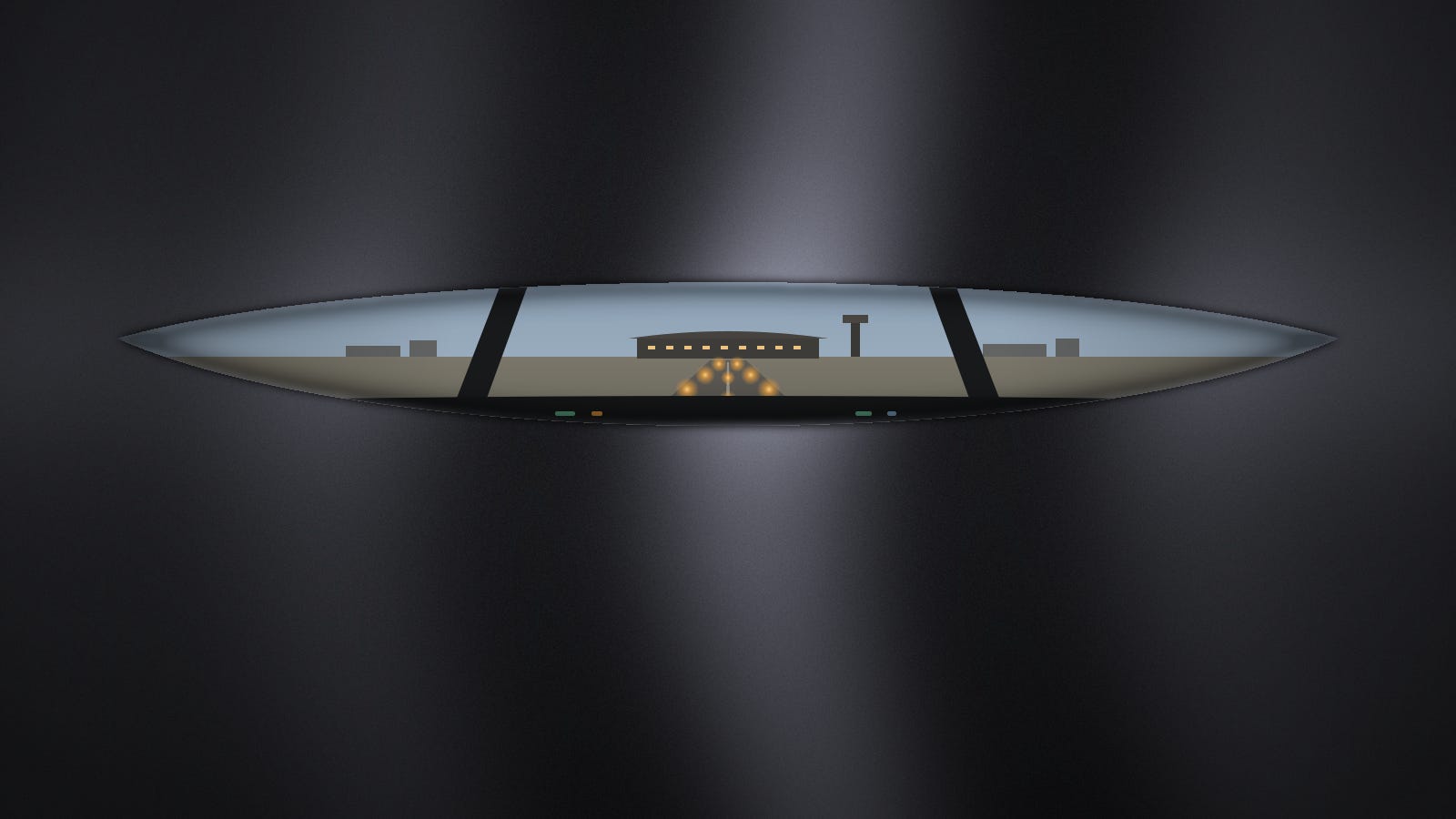
I wrote that jihadis communicate to us “in a kind of pantomime,” acting out what they cannot say and unaware of what they are telling us. It is its own unique nonverbal language. I went on to map out their language by writing The Jihadi Dictionary. The posts that appeared on accounts in his name after the attack are pantomime: cockpit footage of Israeli aircraft and photographs of Zawahiri and al-Balawi, with no testament in words. I also described the 9/11 hijackers as children who build a tower of blocks and knock it down, except that the hijackers broke the rule that an airliner carries passengers. According to Corriere della Sera, citing Israeli intelligence, al-Hammami planned to kill the captain quietly and fly the aircraft into the skyscrapers of Tel Aviv. If it is true, it is the block tower knocked down with an airliner. However, according to Hebrew media reports of his interrogation, he intended to land the aircraft at Ben Gurion and then ram it at the last minute into the structure of the airport causing a mass casualty event. That takes the suicide bombing a step further than a skyscraper. The airport is the gate through which Israelis leave and return home, and the passengers would have died at the threshold of arrival.
The Hard Object
Frances Tustin described autistic objects, hard things a child grips for the sensation they give against the skin, in place of a person. In our paper we wrote about hard objects and about the pull that engineering and the sciences exert on minds that prefer the object to the person. The emergency axe he took to the captain belongs to this family of objects, and so does the engineering. One of the most notorious jihadis of the 1990s, Yahya Ayyash, was known as “the Engineer.”
In 2007 Diego Gambetta and Steffen Hertog of Oxford found engineers overrepresented among violent Islamists. Their later book counts 93 of 207 extremists in Muslim-majority countries, about 45 percent, whose field of study is known. Simon Baron-Cohen had already asked in 1997 whether there is a link between engineering and autism. Hertog is careful to say that radical Islamists are a tiny minority of engineers, and so am I. Al-Hammami’s deleted LinkedIn profile reportedly said he studied engineering in Australia, and Australian sources reportedly say his visa lapsed because he was not enrolled. Neither has been confirmed. Piloting is not engineering, but it is a technical profession that draws the same kind of mind. What the record does support is a man whose technical ambition was repeatedly blocked. That fits the first half of Gambetta and Hertog’s explanation, deprivation, and the second, a mind that wants order and certainty.
The Niqab and the Wife
In the Jihaditism paper I argued that the niqab works as an artificially induced autistic environment: sensory deprivation imposed on the woman, so that she lives in the terror the man cannot bear himself, and so that he can control his own terror of being overstimulated. His demand that a wife wear a niqab is thus his projection into her. He makes her feel what he cannot express. He may have missed the phase of symbolization, putting feelings into words, because he did not manage to psychologically separate and individuate from his mother. Still fused with her, he cannot see a woman as a separate person, only as part of an undifferentiated mass, and the niqab makes every woman look the same.
CNN’s analysis of his deleted posts found that in 2022 he wanted a wife who would wear a niqab and stop working, and that he called women in mixed workplaces ruined. I wrote in an earlier post that this is a picture of women split in two: veiled and kept, or ruined. That is the splitting I have described for years, and here it is on his own page. His mother, who told families that her son was a pilot, is the only mother we can see.
The Last Call
Many suicide attackers make a last telephone call home, usually to the mother, and the martyr receives a last blessing from the handler. In the paper I called the phone a hard object that evokes the umbilical cord. Cell phones are hard objects of maternal attachment. Ayyash, the Engineer, died answering a call from his father. No one has reported a last call from al-Hammami. What was reported are the posts, timed to speak when he no longer could, and the loud begging in English that someone kill him. If there was no handler outside, there may have been one inside: a face on a screen, a voice, a figure that watched and judged.
What I Asked in 2008
In 2008 I asked why a screening tool could not be built for the signs I described: gaze and eye contact, sensory processing, the quality of connection. I noted that behavior detection at airports looks for sweating and nervous gestures, and that when a counterterrorism expert asked colleagues whether autism had ever come up, the answer was no. Eighteen years later a pilot whose extremism had been noticed in more than one country was let into a cockpit bound for Israel, because the check reportedly asked whether he had a conviction.
In the preceding post I argued that Israel should demand of every foreign airline the standard the Air Force applies to its own pilots, with an early-childhood and family history. I want to be exact about the purpose. Nothing here is a reason to bar an autistic person from a cockpit. The screening should look for what the descriptor names: terror of connection, the hard object, rage as the only bond, and a history that could explain them, so that someone can screen them out early on.
The paper said it raised more questions than it could answer. This is one of them. It is not whether he was autistic. It is what a mind learns about connection before it has words, in the unseen years from birth to age three, whether anyone is trained to look, and, more importantly, whether anyone understands its lethal ramifications.
Sources: Nancy Hartevelt Kobrin and Norman Simms, “Jihaditism? Parallels between Autism and Terrorism,” Mentalities/Mentalités 22(2) (2008): 1–38; CNN, “Terrorist images found on Flydubai suspect’s social media” (Oct. 2, 2026); Jerusalem Post, citing Corriere della Sera (Oct. 4, 2026); Times of Israel, “Flydubai terrorist said to tell investigators he intended to crash plane into Ben Gurion Airport” (Oct. 4, 2026); Diego Gambetta and Steffen Hertog, “Engineers of Jihad,” Sociology Working Papers 2007-10, University of Oxford, and Engineers of Jihad (Princeton University Press, 2016); Simon Baron-Cohen et al., “Is There a Link between Engineering and Autism?” Autism 1 (1997): 101–109; Frances Tustin, Autistic Barriers in Neurotic Patients (1986); Associated Press and ABC News on his Australian visa (Oct. 4, 2026); Al-Fanar Media interview with Steffen Hertog (2016).
Nancy Hartevelt Kobrin, PhD, is a Tel Aviv–based psychoanalyst and counterterrorism scholar. https://www.amazon.com/Nancy-Kobrin/e/B002RF9D5Y