Jihadi terrorism creates a relationship between attacker and attacked, one that is violent, unwanted, and deeply asymmetrical. In an instant, the attacker projects terror into our lives and stamps it into memory. The imprint can be physical, emotional, and social. For many, it becomes part of the ground from which trauma grows.
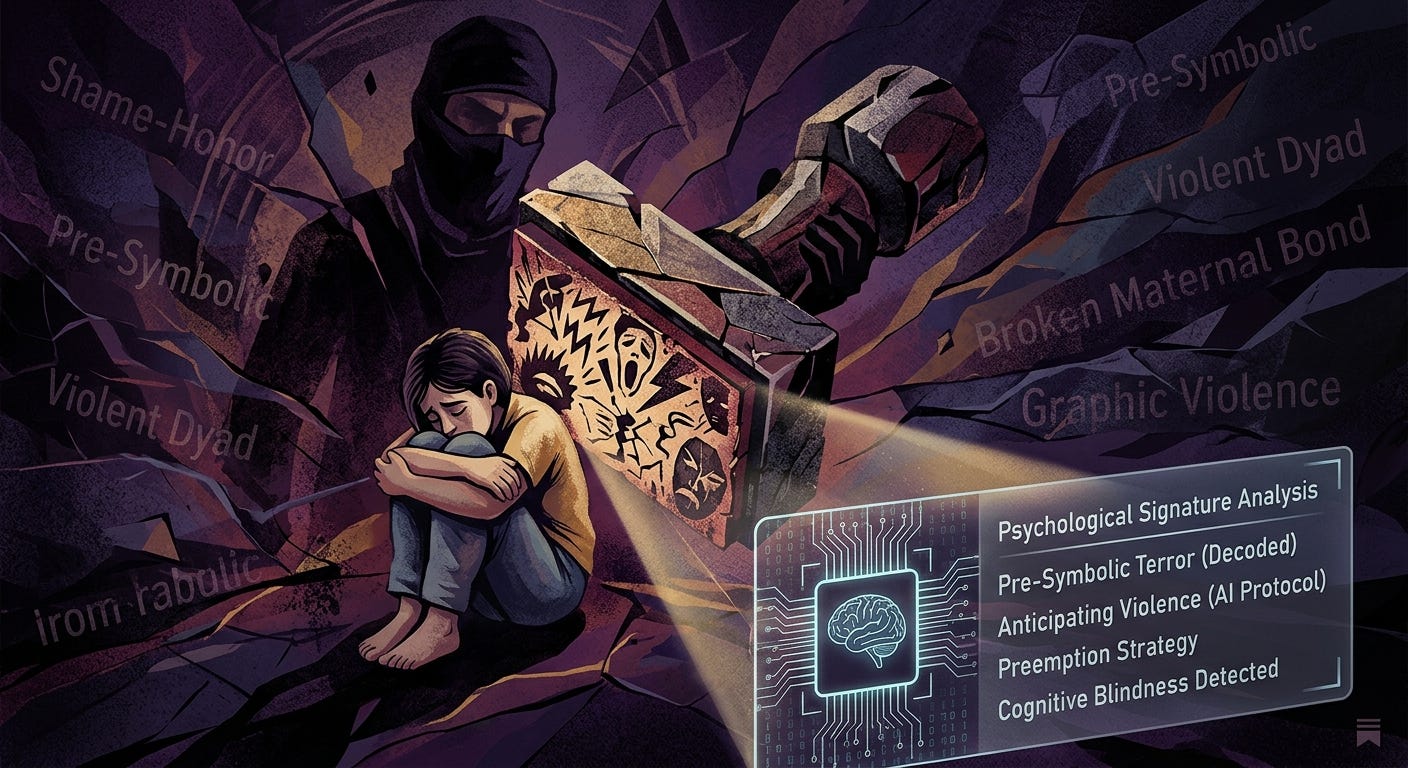
I call this bond a dyad because it echoes the first dyad any of us knows, the one between mother and infant. That relationship is built before words, out of touch, voice, rhythm, gaze, and smell. It is where we first learn whether the world is safe and whether someone will hold us when we are afraid. The jihadi’s own early dyad, in a shame-honor culture that so often breaks the maternal bond, is where I look for the roots of his violence. In the attack he reverses his own history. The once-helpless child becomes the one who holds absolute power, and the victim is placed where he once stood: overwhelmed, unprotected, at the mercy of another’s will.
This is why the experience so often defies speech. Terror strikes the body and the senses first, in the register where the infant lived before language. Survivors often cannot narrate what happened. They carry it as images, sounds, smells, and bodily states that return without warning. The imprint is nonverbal because the dyad it reenacts is nonverbal. The problem of the jihadi is presymbolization. They never learned to use language to express their emotions of terror. Their violence is very graphic and brutal.
None of this means the two sides are equal, or that the bond is chosen. It means the violence reaches beyond the moment of attack. It can shape how survivors see the world, how communities respond, and what a society comes to fear.
To respond well, we need to understand how jihadi terror is transmitted, how it takes hold, and how it may influence our choices. We must also seek to understand the minds and terrors that animate jihadi violence, not to excuse it but to see the threat clearly and improve our strategies and tactics and by this I mean to integrate this developmental aspect into AI to defeat jihad.
The attacker cannot put his terror into words, so he puts it into us. That is the logic of the imprint. He hands his unspoken fear to the victim and calls it power. We resist by doing what he never could: putting the terror into words, naming it, tracing it to its source, and refusing the place he assigns us. The jihadis are essentially cognitively blind. They can not turn the corner and take a look at themselves because of exquisite shame as a result of their shame honor culture. A society that can symbolize and articulate what the jihadi only enacts is no longer his helpless victim. That developmental knowledge is what I want built into the tools we use against him, including AI, so they read the signature of jihadi violence and anticipate it and even preempt the violent bonding rather than answer it after the blood is shed.
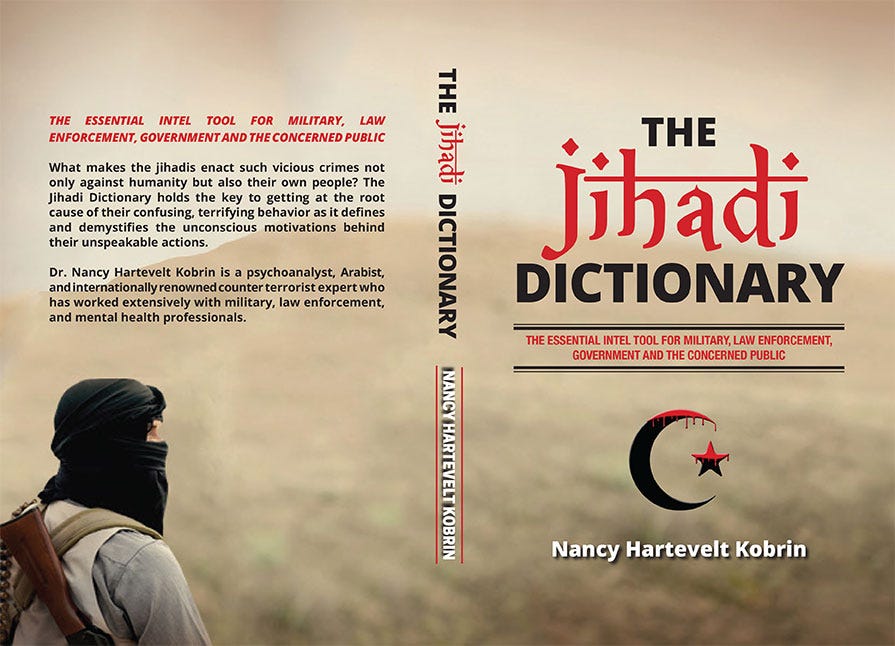
Nancy Hartevelt Kobrin, PhD, is a Tel Aviv-based psychoanalyst and counterterrorism scholar. https://www.amazon.com/Nancy-Kobrin/e/B002RF9D5Y